You are browsing the archive for Whisky Women Archives - Miss Whisky.

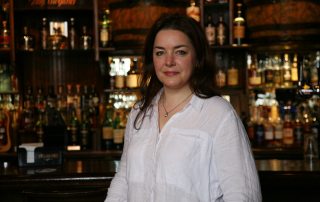
Karen Walker

May 17, 2013 in Whisky Women

“I feel proud every day working in an industry that is borne from my home country. It’s an industry that is pure, honest and endearing.” – Karen Walker


Karen Walker is the Marketing Director of Scottish Brands for International Beverage, which owns brands like Balblair, Old Pulteney and anCnoc.

She has been involved in the whisky industry for 21 years and in this Whisky Women interview she speaks about her various roles, how things have changed over the past two decades and what whiskies really take her fancy.


Tell me about your career in the world of whisky:

I graduated with a degree in Business Studies and Marketing in 1992. As it was during the Gulf War and a UK recession I took the first job that came along, which was in the marketing department of an engineering company. Two years later they closed the Edinburgh office and I was out looking for a job. I was lucky – a role came up as Marketing Executive for Invergordon Distillers and I have never looked back!

I was at Invergordon Distillers for five and a half years and I not only gained invaluable experience in the marketing of Scotch whisky, but a wide variety of other spirit categories – Irish whiskey, Canadian whisky, bourbon, vodka, gin. Then a role came up at Morrison Bowmore Distillers (MBD) as Brands Manager and again, I jumped at it.

The years at MBD were invaluable. I travelled extensively around Europe as Bowmore punched way above its weight in that region at that time (15 years ago now!). Bowmore grew by 100% in the time I was there. Don’t be misled, I was not the only Brands Manager – there were two of us. However to be part of a team that cheered at milestones, celebrated at distributor wins, and joined together to work as a team made me realise there was nowhere else other than the Scotch whisky industry that I wanted to be.

I started with Inver House Distillers as Marketing Manager in 2003 with two Brand Managers and a Marketing Executive, managing the portfolio globally. Inver House Distillers was integrated into InterBev Group, part of the Thai Bev group, and on returning from maternity leave in Oct 2009, having had twins, I became Marketing Director of the Scottish Brands portfolio.

We are now a team of 10 and I am immensely proud of the marketing team and could not be here without them supporting me every day.

What makes you most interested in this spirit?

I feel proud every day working in an industry that is borne from my home country. It’s an industry that is pure, honest and endearing. And of course I love working with people every day that have a true passion for what they do, from the stillmen to the accountants.

What was one of the first whiskies you tried that you really loved?

The Lowlands. At the time I was young and female, obviously, so they were easier for me to enjoy on the palate and not too challenging. I have grown to love anCnoc 16 year old and Old Pulteney 12 year old. And Old Pulteney 21 year old, well, it is quite simply outstanding. But a Balblair for me during the festive period is gorgeous: add together a roaring fire with a happy family around me, an after dinner Balblair in hand, and the world is a great place.

What does your role entail on a day to day basis?

No day in any year is ever the same. We work on an annual calendar so projects come around year by year. This is what keeps every day alive, buzzing, challenging and rewarding.

What is your favourite aspect of what you do?

I love seeing concepts come to shelf, seeing the consumer enjoying something I know came from an idea in our Airdrie office.

I also enjoy developing partnerships worldwide with distributors’ networks where we build the brands in markets that we could not get to without them.

Then there is educating consumers about the nuances of Scotch and how complicated, how simple, yet how enjoyable it can be.

Whisky is increasingly of interest to a younger consumer. As a marketer, are you excited by this potential?

Yes, of course we are all excited about this. However education is still essential. The emerging markets of China, India, Mexico and Brazil are indeed exciting, however we have to ensure we maintain the integrity of Scotch and market our brands responsibly to any younger demographic.

What is your opinion on minimum pricing?

In the industry we have to market our brands responsibly, and in the Scotch whisky industry we do. I do not believe that minimum pricing/regulation is the best way to achieve the common goal of minimising alcohol abuse.

Do you think more women could or should work in the whisky business?

Absolutely. When I started 21 years ago I was a minority, trying hard to carve my way in a company with traditional management structures in place. This was the case in many industries, not just the Scotch whisky industry.

Things have changed now and today eight of the 10 strong team I manage are women, and they are all strong minded, capable, reliable and loyal and I enjoy every day I work with them. We work with men and women across all departments of the organisation and the industry. It is great to see women getting opportunities in senior management roles.

What is one of your most cherished memories involving whisky drinking?

There are many moments and happy memories to recall. Friendships I have made, and stories I have shared while enjoying a dram. Too many to tell in this interview!


Alice Lascelles

May 3, 2013 in Whisky Women

 ”There are so many wonderful stories to tell about whisk(e)y – and yet it still remains so very misunderstood. I’m excited by the challenge of trying to change this.” – Alice Lascelles


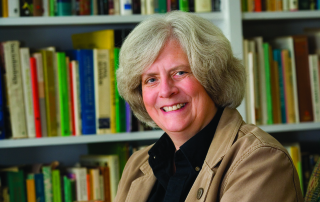
 Alice Lascelles is the new Sunday Times and Times Columnist on spirits and a founding editor of highly regarded industry magazine Imbibe.

As a whisky lover since a visit to Jura distillery early on in her journalism career, Alice is setting the pace for getting more coverage of the water of life in mainstream media.

In this Whisky Women interview, she speaks about her most memorable dram, what inspires her about whisky and why she agrees with Caitlin Moran that it would be nice to be considered just one of ‘the guys’.


What made you want to write about whisky?

When I began in the drinks world ten years ago I wasn’t immediately drawn to whisk(e)y. Like many people, I thought it was intimidating, cliquey, old fashioned, geeky. But gradually I discovered a different side to it. I learned that it can be artistic and exciting and pretty rock and roll too. It’s a subject that takes you on fascinating journeys all over the world, and has made me all kinds of new friends. It teaches you about science and geography and history and politics. It ignites your imagination and expands your vocabulary. There are so many wonderful stories to tell about whisk(e)y – and yet it still remains so very misunderstood. I’m excited by the challenge of trying to change this.

Do you remember when you first came to like whisky? Was there a dram that hooked you in?

The very first distillery trip I went on as a cub reporter on Wine & Spirit International was to Jura. We crossed by boat – there were seals, whirlpools, George Orwell’s house. I sat by the fireside that evening at Jura House, dram in hand, and thought – yep, this is the life for me. I was completely blown away by the romance of it. My most memorable dram however, was my first taste of Talisker 10, which I had at the 175th Anniversary celebrations on Skye. It was with an oyster straight out of the sea – the combination of flavours was dazzling, and it remains among my all-time favourite drams to this day.

What do you find most inspiring about whisky?

I think a really under-appreciated side of it is the incredible artistry that goes into making whisky – I think most people still think you just punch some numbers into a computer and then pull a lever. The myriad different factors that shape a whisky’s flavour, and the skill of those people whose task it is to manage them is awe-inspiring. I love the fact that no machine has yet been invented which can improve on the human nose. And I find wood in particular absolutely fascinating.

What do you enjoy most about the drinks industry?

It’s populated by people who are really passionate about what they do, and who also enjoy living well. If you’re interested in what they do, they’ll throw open their doors for you.

What frustrates you about how whisky is perceived/spoken about?

Despite the excellent efforts of certain people, I think the industry is still guilty of being very cliquey and jargon-ridden. I’d go so far as to say that some whisky professionals deliberately cultivate that air of impenetrability simply to feed their egos. Whisky is many amazing things, but at the end of the day it’s still just a drink.

I’m reluctant to mention the ‘s’ word – but I’m afraid it’s also still disappointingly sexist. If you happen to be blonde, people always presume you’re the PR person. Only the other day I was sitting next to the CEO of one of the world’s biggest whisky producers at an industry lunch. I’ve been writing about whisky for nearly ten years, am the founding spirits editor of the leading drinks magazine for the UK on-trade and write two weekly columns for the Times Whisky Club and yet he still turned to me and said: ‘So, do you actually like whisky then? I mean, really?’ You’d be amazed how often I get asked that – I’m pretty sure it wouldn’t be the same if I was a man.

What would you like to impart on readers of your column?

Don’t be scared. Have fun. Don’t get so hung up on age statements.

What achievement are you most proud of in your drinks career?

The other day a reader of my Times columns said to me: ‘Your column has made us realise that we are interested in something we didn’t know we were interested in.’ As a journalist, that is the highest praise I can imagine.

Do you feel more women should or could be involved in the whisky industry?

I think not enough is made in the mainstream media and marketing about how many female whisky makers there are – I think people would be very surprised. However I’m absolutely opposed to any special measures designed to include more women in the industry – as Caitlin Moran would say, can’t we just all be ‘the guys’.

How do you think the industry has developed/changed since you’ve been involved?

As a journalist, I’d say the really big change that’s just happened in the last year or two is the increase in spirits coverage in the mainstream consumer media. It’s still criminally small compared to wine, but it’s getting there. I’m very excited to be part of that.

Why would you encourage someone to try whisky?

It’s the start of a fascinating journey of discovery that will last your whole life, which can take you to extraordinary places, introduce you to all kinds of people, and which, perhaps most importantly, you can share with your friends. That conviviality is one of things I love most about whisky. Oh, and it’s bloody delicious.

What is your favourite memory of whisky drinking?

So many – but the best usually happen outside.


To read more from Alice Lascelles, check out her twice-weekly blogs on the Times Whisky Club website: http://www.timeswhiskyclub.com/blog/

Michelle Myron speaks to Miss Whisky

April 15, 2013 in Whisky Women

 ”Whisky, especially in the UK, has an image of old men – it’s sad but true. A more even gender balance would benefit the industry as a whole.” – Michelle Myron


Michelle Myron is a German speaking tour guide at the Glenfiddich distillery in Dufftown. She also runs her own business – Speyside Tours – a part of which takes visitors to the region on walks to see the distillery sites past and present, and teach them about whisky history.

In this Whisky Women interview, Michelle speaks about her earliest memories of whisky, the eeriness of visiting closed distillery sites and why the spirit inspires her.


What are your earliest memories of whisky?

My first involvement in the world of whisky was as a child, when I used to go to my uncle’s work. He was a warehouse man at a Dufftown distillery. We would go to his work at the weekend and even then I loved the smell that hits you when you open the warehouse door. The warehouses were a great to play hide & seek in; obviously in those days health & safety wasn’t such an issue!

What inspires you about this spirit?

The history of whisky, how it has evolved, the regional variations, the provenance and the integrity of the product: these are all factors which inspire me and maintain my obsession with whisky!

I also really enjoy it – it is a great pleasure for me to nose and taste whisky and the fact there are so many means that I am always finding new favourites, which change depending on the time of day or occasion.

What was one of the first whiskies you tried and loved?

I was influenced greatly by my dad’s tastes.  Speyside malts were predominant in the house so I believe Macallan was my first dram. Because of the extensive use of sherry casks it was quite sweet and a good one to start with. I still drink Macallan today and feel that it is a good example of an elegant Speyside whisky.

What is your favourite aspect of what you do at the distillery?

Converting the non-whisky drinkers! And introducing visitors to expressions other than the 12-year old is interesting too – it shows the difference time makes but also lets them experience the 15-year old which is the Solera expression.

In the in-depth specialised tours visitors get to see the famous Warehouse 8 and the home of the Glenfiddich Solera Vat – this is a special place for me and feels very magical since Glenfiddich was the first to pioneer the Solera system in whisky production.

Glenfiddich

You also run whisky tours in Speyside. What made you want to do this?

I started Speyside Tours because of an obvious demand. When speaking to visitors at Glenfiddich I realised they would fly into Edinburgh, drive up to Speyside, do Glenfiddich, Loch Ness, Skye and then go back to Edinburgh.  I would say nearly 70% of tourists follow this route, but there is much more to see and do, many attractions off the tourist trail.

Due to my love of whisky I started to offer the Dufftown Distillery walk, which takes you on a “Dramble” around the nine distillery sites of Dufftown, past and present.  We conduct nosing and tastings but also give insights into the history of whisky in Dufftown.  People learn about what life was like for the distillery workers, from the 40s through to the present day and the stories of how workers would get one up on the management, which people love to hear.

What do you enjoy most about doing the whisky walks?

I love meeting people from around the world who have an interest in whisky; I never fail to be impressed by the international interest in our whisky. Personally, I also like when we visit the mothballed Parkmore distillery – it is still so intact and has an eeriness to it, you half expect it to start up production or a warehouse man to come out and tell us to get out of the way. I like also the visit to The Balvenie, to see the maltings there and the smell of peat on a Scottish summer evening, to know this has been done like this for the last 120 years.

Do you think more women should or could work in the whisky industry?

I definitely think more women should enter the whisky industry and at all levels. Whisky, especially in the UK, has an image of old men – it’s sad but true. A more even gender balance would benefit the industry as a whole.

What is your favourite memory involving whisky drinking?

My most cherished memory of drinking whisky is the times doing so at home with family and friends at Hogmany. There are always lots of people in a confined space and a neighbour will come in with bagpipes – very stereotypically Scottish but true.  The noise is deafening in a confined space – more whisky is then required.  There’s lots of arguing over the best whisky but at the same time, we’re all there, enjoying our national drink!

Julie Hamilton speaks to Miss Whisky

March 20, 2013 in Whisky Women

 ”The more women getting involved the better. We need to shake the male dominated stereotype of the whisky industry.” – Julie Hamilton


Julie Hamilton is a founding member of Glasgow’s Whisky Club, a successful tasting group that has been run for seven years.

In this Whisky Women interview, she speaks about which drams hit the spot, the importance of social media in the whisky community and her favourite memories of imbibing.


How did you first get into whisky?

I started drinking blended whisky in my early twenties and dabbled with the odd malt here and there. I developed an appreciation for malts when we started Glasgow’s Whisky Club.

The Club has been going for seven years now – did you expect it to become so established?

We had no idea it would grow to be the club it is now! We started with around seven or eight of us just getting together once a month for a dram or two. We’ve got a membership of around 75 now with a waiting list to join every year, and run mid-month tastings as well as our club nights on the first Tuesday each month.

What has been one of the best things about being a part of Glasgow’s Whisky Club?

I guess meeting loads of great people – it’s great to get together with like-minded souls at least once or twice a month!

What is one of your favourite whiskies?

This varies with what I’ve been tasting in a week – my favourite changes regularly! A constant though would have to be Glentauchers – a nice light Speyside not usually seen as a single malt, that’s more often a component part of a blend. I also love the other extreme in Ardbeg. A varying taste.

What do you think Glasgow’s Whisky Club has brought to the whisky scene?

I think the Club offers a down to earth, informal approach. All too often clubs are quite stuffy and uptight. Our approach is to encourage everyone to enjoy whisky irrespective of their level of knowledge or taste. All are welcome!

Do you think the online whisky community is a help or hindrance to the world of whisky?

I think it’s a huge help! I network with whisky enthusiasts all over the world via Facebook, blogs, Twitter etc that I wouldn’t have access to otherwise. It’s a great medium for sharing information on whiskies either old or new, finding out about events and new places to visit as well as hearing about other people’s experiences and opinions.

Do you feel more women should or could be involved in the whisky industry/running clubs?

Absolutely! The more women getting involved the better. We need to shake the male dominated stereotype of the whisky industry. There’s lots of us already.

Why would you recommend someone who’s never tried a good single malt to give it a go?

Because there’s a whisky for everybody – the fun is in finding the one that’s for you!

What is your favourite memory of whisky drinking?

My first ever Whisky Fringe in Edinburgh – I had never attended a festival or event before and it was truly a magical experience; I was just like a kid in a huge sweetie shop. I now go to as many events as I can manage in a year.

Helen Arthur speaks to Miss Whisky

February 22, 2013 in Whisky Women

 ”The thrill of tasting a new expression or discovering someone who has the courage to build a new distillery is just as good today as it was when we first started.” – Helen Arthur


Helen Arthur is a well-known whisky author and archivist and former whisky PR who has been involved in the industry since the 1980s.

As an original ‘Whisky Woman’ she published her first book – The Single Malt Whisky Companion – in 1997. It was the first fully illustrated whisky book to hit the market and was an international best seller.

She has since gone on to produce numerous titles and in this Whisky Women interview, she speaks of her 30-years of experience in the industry, how women’s roles in it have developed and the bemusement with which she and other whisky commentators view changes in the industry.


How did you get involved in the world of whisky in the 1980s?

I went to work in Scotland at Hall Advertising in 1981 when my husband Dick (who was in the Parachute Regiment) was posted to Edinburgh. Among other accounts I worked on was The Glenlivet and Glen Grant.

I then went to Manchester Business School and met a man called Patrick Gallagher. We set up a PR business together and our first account was The Famous Grouse. For the next 20 odd years I always had a whisky account among my PR clients so I found myself writing about whisky.

What made you want to continue writing about whisky?

I thought about writing a book on whisky after we completed a special project with The Glendronach, but didn’t find the time. In 1996 my husband died and I received a phone call from a publisher suggesting I might like to write a book about whisky as part of their ‘Companion’ series. Apparently they had asked other writers but they couldn’t help and they had all said I might be interested as I was recently widowed and could well appreciate something different to do, and I knew the whisky industry backwards.

I was quite nervous to start with but with encouragement from friends I wrote my first book. The most exciting thing was that for the first time they agreed to photograph each bottle and not just rely on labels as previous books had done. I also suggested they add more colour photographs to make the book different. It turned into an international best seller – one cannot ask for more than that.

I am very grateful to a huge number of people who supported me and gave me the benefit of their time and experience – they were all hugely inspirational.

Helen Arthur Whisky

Helen Arthur, writing about the Classic Malts Cruise

What was the industry like 30 years ago for women?

There were quite a lot of women in the whisky industry but nobody talked about them – there were women working in distilleries, but our key strength areas included PR, marketing, visitor centres etc. We were very much front line.

Today, thanks to a change of view by the industry as a whole, women are very much seen as part of the total mix. There are key women in distilleries, as managers, makers, blenders, cask managers and a whole lot more and, of course, people like you and me who bring a feminine touch to the writing side of the business!

What is a favourite whisky you’ve tried?

That’s a very difficult one to answer. I have tasted many fabulous whiskies. One which sticks in my mind though is a Ben Nevis 27 years old – it was absolute nectar. A consistent favourite has been Bowmore 17 years old.

You’re also a spirits archivist. What interesting stories have you come across?

Boxes containing nearly every letter written by James Burroughs who founded Beefeater gin were a fascinating insight into his life and the period in which he lived. The fact that he’d gone to America to seek his fortune and that his return was so well documented really brought him to life. We also found his diaries and cash books with items such as shoes for his children.

Whilst working on the life of William Teacher I discovered similar details including lists of their daily deliveries from one of his shops of wine, port and whisky.

Perhaps the best has to be the telegram from Niagara Falls during Prohibition addressed to Laphroaig distillery saying ‘the medicine has arrived’.

What do you think is missing in whisky writing at the moment?

I realise I am a bit of a dinosaur, but I do feel that whisky writing has changed. If you pick up any magazine topics are shorter without great depth and many of them are simply repeating what others have said over and over again – inevitable, perhaps, but I know there is still a lot out there to tell.

I think we need more in-depth interviews with people who have made whisky great over the past 50 years – there has been an extraordinary revolution in the whisky industry and it has grown exponentially. This is true in part because of demand, but there wouldn’t have been that demand without the dedication, professionalism, love and consistency of standards which the guys (and gals) at the coal face put into making whisky every single day.

We have also lost sight of the terroir aspect of whisky and perhaps some in depth research on this might be interesting. For example Diageo moved away from maturing everything at source some time ago, whilst others firmly believe that everything has to be done at the distillery.

What achievement are you most proud of in your career?

I think the best achievement overall has to be that I have introduced so many people to the wonderful world of whisky through my books and tastings, and have made a huge number of friends.

Also, through my profession, which is also my passion, I have been able to raise money to help others. My husband was looked after during his last three days by our local hospice – St Michael’s in Hereford. The year after his death through a network of lovely friends I held whisky dinners in private houses and we raised over £7,000 and I continue to raise money for them each year.

Additionally I have raised money through whisky events in Kenya to help build schools in the Northern Territory, dig a well for an orphanage in Nairobi and pay for a young girl to have a heart operation.

And, of course, having my name on my own whisky collection is pretty cool!

Helen Arthur Whisky

One of Helen's paintings


You’ve known folks like Jim Murray and Jim McEwan for years. Do you all discuss industry changes?

I don’t see them as much as I did but we do still chat. I think we are all slightly bemused by the inevitable changes happening in the industry, such as the fact distilleries are getting larger and more automated. But we all still love working in the industry and the thrill of tasting a new expression or discovering someone who has the courage to build a new distillery is just as good today as it was when we first started.

Do you feel more women could or should be involved in the whisky industry?

I think women are finding a proper place in the whisky industry. There is no doubt that there is room for some great female whisky writers. I know that we bring a different complexion to the world of whisky – we smell and taste things in our own way and our descriptors are usually more varied (or, you could say whacky) than those written by men.

What is your favourite memory of whisky drinking?

The first single malt I remember trying particularly was Highland Park. Patrick Gallagher and I had gone to visit the distillery with Matthew Gloag of Famous Grouse. We sat by the shore near Maes Howe – the ancient burial site – and watched the sun go down on a warm February day. Magic!

I do also remember my grandfather suggesting I might like a whisky when I was very young – he liked a tot most days. It was, I think, VAT 69. My great grandfather was a vintner, so it must be in the blood!

Angela D’Orazio speaks to Miss Whisky

December 24, 2012 in Whisky Women

 ”[Whisky] is one of the really enjoyable things in life that I personally would not like to miss out on.” – Angela D’Orazio


Angela D’Orazio is the master blender of Swedish whisky, Mackmyra, the first Swedish whisky distillery which was established in 1999 (for more information, read my piece on Mackmyra here).

She has been in the whisky industry for more than two decades, having worked first with Glemorangie, before running a whisky bar in Stockholm and later starting the Swedish branch of the Scotch Malt Whisky Society.

In this Whisky Women interview, Angela speaks about being part of the rise of Swedish single malts, winning awards for her creations and falling in love with whisky.


How did you first get involved in the whisky industry?

My first job was as brand ambassador for Glenmorangie 20 years ago. Then I worked for Akkurat Restaurant, setting up the whisky bar, running the tastings and the club and travelling to Scotland. I was also on the team organizing the first Guinness World Record whisky tasting in Stockholm in 2001. My ex and I also started the Scotch Malt Whisky Society (SMWS) in Sweden. Then I met Mackmyra and the rest is history.

Do you remember a first whisky you tried that you really loved?

It was a young, fresh Scotch and it was many years ago in Italy in a bar called the Piano Bar. It was most probably a Glen Grant or Glenlivet – I remember it being very smooth, refined and malty. It was love at first sip.

How did you get started at Mackmyra?

I came to work with the on the external sensory panel developing their recipes in 2002 and then I came on board in 2004. It has been generally a really great journey for me and Swedish whisky. It has all been a great evolution, even if we’re not yet a widespread name.

The Special '09 release from Swedish distillery MackmyraHow does it feel to be at the helm of a distillery from early on in its conception?

It is really great and honourable to be creative around such living things as casks, whisky and people. I love it.

What do you enjoy most about your job?

To be the chef of the whiskies, the casks and the bottles! And, working together with great colleagues, meeting with our customers, clients and whisky lovers all over the world. I enjoy the difference in nature of all of those things.

What achievement are you most proud of in your career?

I guess the fact that we won the European spirits producer trophy as the best European spirits producer of the year 2012 – that I think is a fantastic thing and (until a few years ago) an incredible thing for a Swedish whisky to win. I pride myself in having had a part in achieving that.

Do you feel more women should or could be involved in the whisky industry?

Yes, why not? A more gender-balanced whisky world would benefit all, from the board of directors to the distilleries, brands, consumers, whisky bars and festivals!

What should everyone who’s not tried Swedish whisky before know about it?

Most often a Mackmyra whisky is not carrying the heavy burden of too much wood but has a fresher and more vivid impact on the palate and nose. It is malt for the less conformist consumers, outside of the usual. If you are also new to malt or even don’t think you like whisky, you might enjoy a dram of ours.

Why would you recommend someone who’s never tried a good single malt to give it a go?

I’d say it’s one of the really enjoyable things in life that I personally would not like to miss out on.

What is one of your favourite memories of whisky drinking?

My equation is: great people + great place + great whisky = favourite memories! One that comes to mind is when, a few months ago, I was at Fjäderholmarna Archipelago Island, just outside of Stockholm, on a sunny autumn eve. I was with my mum and we were tasting great whiskies. That was a wonderful experience.


Carin Castillo speaks to Miss Whisky

December 7, 2012 in Uncategorized

 ”My main goal for SIA is to delight people by changing the perception of Scotch being for stodgy old rich men, into Scotch being the go-to drink for a new, young, fresh audience.” – Carin Castillo


 Carin Castillo is a former web and App designer who is realising her dream of starting her own Scotch whisky brand through her creation of SIA, a soft, banana, pear drop and vanilla blended whisky.

Based in San Francisco, she is due to launch the whisky later this year if her Kickstarter campaign raises enough funds to get the project off the ground.

In this Whisky Women interview, she speaks about falling in love with Scotch, her desire to reinvigorate the whisky world for a younger generation and the most challenging aspects of starting her own whisky brand.


How did you first get to like whisky?

I’ve had a little love affair with Whisky since I first tried it, about 10 years ago. Like so many, I had that preconceived notion I wouldn’t like it, that it wasn’t for me, that it was too strong. Thankfully, rather than just serving me his favourite brand, the bartender first asked me a few questions about what types of spirits I liked, what flavours, and I think even what types of wine. I was curious and when he chose a brand different than the one he was drinking, and I loved what I was served, I was hooked. I tried the one he was drinking, the one his girlfriend was drinking, and then asked to order another similar one. They were all so different and I realized that there really is one out there for everyone.

What inspired you to create your own whisky brand?

For the past 15 years, I’ve dedicated my career to designing digital products, websites, software applications, mobile apps, and I loved every moment. But the desire to create something tangible, something that exists in the physical world, something for people to taste, smell and touch…this passion has been brewing inside me for a while and my love for Scotch kept telling me that it was time for me to make my own brand.

What have been some of the biggest challenges getting the project off the ground?

By far the biggest challenge in launching this brand is the complicated journey with no roadmap. There are a million books out there about “How to Start a Business”. There’s not a single one that tells you “How to Create a New Brand of Scotch”. I’m lucky in I was aware of how much I didn’t know, since I was coming at this from a different background. I didn’t grow up in a distilling family; I didn’t work for a major brand, so I gave myself permission to ask all the questions. I spent a lot of time talking to people from brand owners, to ambassadors, bartenders, restaurateurs, entrepreneurs, spirits/beer/wine industry professionals, packaging experts, importers and distillers. And because I was in no rush to launch this, I was able to take my time with what felt right. I’d say this has been over three years in the making, with me finally really pulling the trigger about a year ago. Since then, things have been cruising along great.

It must have been an educational roller-coaster: what’s been the most important thing you’ve learned?

One of the biggest joys in this process by far has been the realization that people are out to help you. People want you to succeed. Of course, there will be some doubters, but overall I’ve been delighted at how welcoming people have been. The big lesson has been that it is okay to put yourself out there, it’s okay to ask for help, you will be surprised how easily the help comes when you need it.

How did you get a distillery to get involved with the project?

I began my research through third party bottlers but in the end the perfect distillery came to me through my importer. I was lucky enough to find Spirit Imports Inc. early on and build an amazing relationship with them. The owner is the president of The Scotch Malt Whisky Society of America, hosts the The Single Malt & Scotch Whisky Extravaganza, produce a line of Scotch and run www.thewhiskysisters.com. All along the way they have provided the perfect guidance and support and I couldn’t have asked for a better partner. Their existing relationships with various distillers led me to the perfect blend based on the flavour profiles I had spent years researching through tasting events.


Why did you decide to name it SIA?

SIA, in Gaelic, means the number six, which happens to be my favourite number. I wasn’t looking for this, but when I found myself digging through Scottish baby name books, and then the Gaelic dictionary (literally went through the entire thing!), SIA jumped out at me. It was so elegant. I had initially thought about wanting a name that began with the letter S because I had found a beautiful character (now my “S” logo) and SIA Scotch had such a nice ring to it. I especially love the brevity of the name, easily pronounceable, and small enough to appear fairly large on a bottle, so that people can see it from their chair at the bar, or on a store shelf.

You’ve designed a modern bottle – was it important for you to create a whisky that felt fresh and young?

Absolutely! My main goal with SIA is to bring Scotch whisky to a new generation of enthusiasts. It was important to me that everything about the brand felt fresh and modern. The packaging, the promotion, the name. I want a new audience of young men and women in general, a new market of internationals, and even people who already love Scotch but want something new and different, to all come to enjoy SIA.

You’ve turned to Kickstarter to help raise funds for launching the product – how helpful is this type of funding platform? Would you recommend it to other small business start ups?

Kickstarter is an amazing resource for companies that have an idea and need the funds to help bring it to market. You can get the extra kick to bring the dream into a reality. One challenge with a spirits brand is that Kickstarter’s guidelines strictly prohibit giving alcohol as a reward for your pledge. Most of the projects on Kickstarter are basically pre-orders. This was a huge obstacle, but I knew this going in so I was able to create some interesting rewards in lieu and I was so excited to see that people believed in the project so much, that there have been an overwhelming number of requests for how to pre-order or order online for one of the first run of bottles.

What is your main goal for the whisky?

My main goal for SIA is to delight people by changing the perception of Scotch being for stodgy old rich men, into Scotch being the go-to drink for a new, young, fresh audience of people who want to enjoy it neat, on the rocks, and yes, even in a cocktail!

There is such a buzz about craft distilling in the States at the moment. Do you think it will be difficult to launch a product made in Scotland into a market being saturated by local craft distilling?

I hope not! If there’s something I’ve learned from living in Northern California, where there are so many brands of wine, is that there’s something out there for everyone. And that there is so much joy in finding something new, to switching things, up. It’s great to have a favourite. I definitely have mine and I enjoy trying new things.

As a female whisky creator, do you feel more women should or could be involved in the whisky industry? Do you hope to see more women following in your footsteps?

Absolutely. I love what I’ve seen in the last few years. So many more women are drinking brown spirits. I also really love what I read on your blog, on whisky for girls, on Women and Whiskies and their events. I read an article by Dr. Oz on Oprah’s website:  that women have more taste buds than men and on another study that women are more likely to be supertasters. I’ve noticed at my tastings that sometimes men and women will describe nose, palate and finish differently and I’d imagine these are the factors that play a big role there.

But I’m no stranger to being a woman in the minority. Recently, I completed my journey in becoming a licensed pilot. Only 5% of pilots in the United States are women and I realized how important it is to stick together, learn from one another and encourage growth. I’d absolutely love to see more women creating their own brands and am happy to help lend advice to anyone interested. I was lucky enough to have people help me along the way, so it’s great to be able to pay it forward.

What do your family and friends make of your project?

My family and friends are so excited that I finally pulled the trigger. I’m sure they’ve heard me toss this idea about for so many years, that they are proud it has finally launched, and to such great reception. Many of them have contributed to the Kickstarter campaign. Thanks to their help, I’ve raised 85% with a few weeks left to go.

Why would you recommend someone who’s never tried a good whisky to give it a go?

Depending on what they are looking for, I’d easily recommend a great blend as much as a great single-malt. One of my favourite shops- The Whisky Shop in San Francisco organizes their whiskies by region- it’s a great way to discover new brands based on other brands you already know you enjoy. Also, in my experience, the reality is that it can be too strong for someone as their very first intro to Scotch. I like to ramp people (very) slowly to an Islay. I sometimes remind people that just because they don’t like one brand of Scotch, doesn’t mean you simply “don’t like Scotch.” I liken it to saying “I don’t like wine” because once you had a brand of merlot you didn’t like.

What is your favourite memory of whisky drinking?

The best ones are always the ones that revolve around someone who tried a brand of Scotch at one of my old tasting events (the ones that were pairings, where I’d co-host a Fashion/Jewellery Show, Public Speaking event, Fundraiser, etc. to attract an audience of non-typical Scotch drinkers) and someone would contact me weeks later and say: “I thought of you yesterday- I was at a bar and I ordered a Scotch for the very first time, and I really liked it!”

To find out more about Carin’s campaign, go to: http://www.kickstarter.com/projects/siascotch/sia-scotch-whisky


Laura C Hay speaks to Miss Whisky

October 9, 2012 in Whisky Women

Laura C Hay has been involved in the whisky industry for 10 years and is now a brand ambassador with Chivas Brothers in Australia, where she has been based for 18 months.

In my latest Whisky Women interview, which can be read in full here, I speak with Laura about the loneliness of working in the middle of nowhere, the great friends she’s made in the whisky industry and why she’s glad she didn’t give up on her whisky dreams to work for ASDA.

Georgie Bell speaks to Miss Whisky

August 30, 2012 in Uncategorized, Whisky Women


New on Miss Whisky: I speak to the effervescent Georgie Bell, an ambassador with the Scotch Malt Whisky Society in Edinburgh about falling in love with single malt, surviving a diploma in distillation and serving a leading lady from Sex & the City in the bar.

Here here to read the full interview.

Amanda Ludlow speaks to Miss Whisky

August 20, 2012 in Uncategorized, Whisky Women


New on Miss Whisky, I speak to Amanda Ludlow, the co-founder of whisky event and tasting company The Whisky Lounge about the dram that changed her into a whisky lover, her thoughts on the industry and her proudest whisky achievements.

To read the full piece, head here.