You are browsing the archive for Speyside Archives - Miss Whisky.

Finding Speyside’s Spirit

May 10, 2013 in Events, Reviews

Spirit of Speyside images

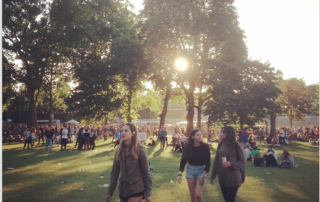
It was when I was in the village hall in Aberlour that I really grasped the true meaning of the Spirit of Speyside Whisky Festival.

Inside the traditional wood-floored, stained glass windowed hall, dozens of people of all ages gathered together for a ceilidh. White haired ladies and dapper elderly gentleman sat chatting to tourists from Brazil, Canada and America, while a wedding party – dressed up in their finest – created a buzz of happiness felt by all.

At my table, James Walker – the humble and inviting head of the Walker Shortbread family – spoke to me about his memories coming to the hall as a child to watch films with his fellow local school children, while beside me festival organiser Mary Hemsworth spoke to everyone about the success of the many days of events.

As the ceilidh band struck up a tune and the newlyweds (who’d decided to celebrate their wedding evening with the local community) stood to take their first dance, I marveled in the wonderful welcoming nature, the simplicity and friendliness, the true heart of a community that one doesn’t find just anywhere anymore.

This is Scotland to me. And this is Speyside.

Stills MortlachWhile the whisky we love gets its fair dues, it is the people, the beating heartbeat of the Speyside region that make the wonderful product. And it is at the festival of the same name that I had a moment to slow down and see just what makes it such an important spot.

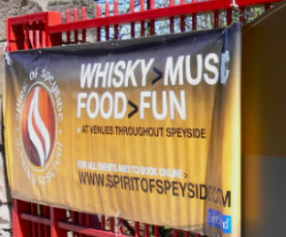
By the time I took a second’s breather to realise all of this, it was already the final night of the festival for me. I’d been in Speyside for four days to take in the yearly event which sees hundreds of distillery tours, parties, ceilidhs and concerts take place in the heart of Scotland’s whisky making world. I’d attended the opening dinner of the festival at The Glenlivet; witnessed the re-opening of Tamdhu distillery and seen well-known TV and newspaper commentator Olly Smith talk about its new 10-year old whisky release; visited The Macallan, Aberlour and Mortlach; danced to the Treacherous Orchestra at Glenfiddich; eaten my way through plates of smoked salmon; and, tried more drams than I can remember.

Glenlivet QuaichBut on that final night, I saw why people keep coming back year after year to the region – it’s because it has a heart and soul that far surpasses just the whisky but which is instilled in each bottle.

Over the coming weeks, I will write about the distilleries and drams I visited and tried, the positives and negatives and the various characters that keep Speyside alive.

On the opening night, I was awarded the honour of International Whisky Ambassador of the Year for the festival in tandem with fellow blogger Keith Savage. I was completely blown away with shock by this honour. I don’t remember entirely what I said in thanks that evening but I know it went down the lines of being so proud to be able to talk about such a wonderful area not just because of the whisky but because of the people, because the region embodies a similar spirit to that which I grew up in Canada with.

I hope when you open your next bottle of Speyside whisky or if you get the chance to head up to the region to meet the people behind the spirit, you too get the chance to witness the conviviality of it all. I may be a Canadian, living in England, but there will always be a little part of me that feels Scottish. The festival simply cemented that for me.

The Balvenie: Single Barrel 12 year old

April 27, 2013 in Reviews

Balvenie Single Barrel 12I’ve been a big fan of The Balvenie since early on in my whisky tasting journey. It started, as I’ve now learned it does for many people, with the DoubleWood 12 and one of my favourite whiskies of 2012 was the Golden Cask Rum Finish 14 year old. I’m a sucker for whiskies that have a tropical fruit, honey and spice backbone and this company seems to almost always tick the boxes (at least on its more bourbon-influenced releases).

But I have decided that the latest release has now plumped for top position in my book.

The Single Barrel first fill 12 year old is the new kid on the block for The Balvenie. Last year, the company introduced the Caribbean Cask 14 year old and the DoubleWood 17 into its standard line-up.

The company already has a single cask bottling in the form of the Single Barrel 15 year old but that isn’t restricted in terms of the type of cask used. It is also being slowly phased out, so this 12-year old will likely be the star of the single barrel show in the near future.

The new 12 year old bottlings will come from first fill American oak ex-bourbon barrels, meaning each release should take on the heavier vanilla and sweeter notes one tends to get from a first fill cask (ie: casks filled with Scotch for the first time after holding a bourbon or sherry). It’s being bottled at a relatively high strength for The Balvenie – 47.8% – and is non chill filtered. No more than 300 bottles of each release will hit shelves so at a cost of around £43-£45 it’s quite a steal.

Because it is a single cask, the release I am reviewing will of course be unique, though I’m sure the malt master extraordinaire that is David Stewart – who’s been with the company for more than 50 years now – will be choosing ones of a similarly pleasing nature.

And so, to the review. Here’s what I thought:

(C): Runny golden honey

(N): Very floral with notes of honey and marzipan, and a touch of lemony eucalyptus, which surprised. As it airs, malty notes and freshly sawed pine wood come into play too. With water, those wonderful sappy pine forest notes come out more for me along with Christmas marzipan or sticky stollen.

(P): On the palate, this has a delightfully oily mouthfeel, due to that non-chill filtering aspect. It’s rich and sticky, and slightly sharp without water because of the high ABV. There are lemony notes, the taste of envelope glue, gummy honey and honeysuckle. With water, this hold up very well – a teeny hint of something almost smoke like emerges before a burst of strawberry foams dipped in honey.

(F): Without water, it’s subtle with fresher honeyed pine notes. With water, for some reason I kept thinking of watermelon bubblegum.

In conclusion, this new release shows it has gusto with its big powerful flavour and the richness that comes from both a high ABV and the non-chill filtering. It makes me want to try every Balvenie in this form to see how the other releases would be if given the same treatment. One to drink in a summer garden.

2003 Glenfarclas Family Cask: Nickolls & Perks

April 22, 2013 in Reviews

The Glenfarclas distillery in Speyside is a great favourite of mine, as are the malts it produces. While I normally shy away from heavily sherried whiskies, for some reason most of the range that this family-owned distillery produce really hit home for me.

I visited last year and managed to try a huge variety in a tasting with George Grant – the company’s brand ambassador and great-great-great grandson of the original owner. My firm favourite has been the 15-year old but the 105 cask strength is also up there.

The company has a large range, including something called The Family Casks, which started out with one bottling of single cask whisky from each year from 1952 to 1994 and now includes seven more releases. If you’re ever in London’s Soho and near The Vintage House, the members’ club upstairs (the Soho Whisky Club) has them all displayed. So, when the folks at specialist wine and spirits merchants Nickolls & Perks told me they had bottled a 2003 selection for their customers, I was keen to give it a try.

This 2003 Glenfarclas was bottled at 57.5% and comes from cask #1448. Here’s what I thought of it:

Glenfarclas Family Cask(C): Melting brown sugar

(N): Almond cake, chewy grainy marzipan, a bit of chocolate and a nice bite because of the higher abv. More orange peel notes come out with water.

(P): A surprising lack of burn on the palate makes for quite a suave whisky. Notes of juicy oranges to start with sherry kick that follows. Mid-sip there is brown sugar and sour plums. With water some bitter notes emerge with addition of dark chocolate, orange and cinnamon.

(F): Woody oranges

This is a lovely bottling from Glenfarclas and while it’s not my favourite (the 15 continues to hold that spot) it is intriguing and very palatable.

For more information on the whisky, including George Grant’s tasting notes and how to order, head here.


Michelle Myron speaks to Miss Whisky

April 15, 2013 in Whisky Women

 ”Whisky, especially in the UK, has an image of old men – it’s sad but true. A more even gender balance would benefit the industry as a whole.” – Michelle Myron


Michelle Myron is a German speaking tour guide at the Glenfiddich distillery in Dufftown. She also runs her own business – Speyside Tours – a part of which takes visitors to the region on walks to see the distillery sites past and present, and teach them about whisky history.

In this Whisky Women interview, Michelle speaks about her earliest memories of whisky, the eeriness of visiting closed distillery sites and why the spirit inspires her.


What are your earliest memories of whisky?

My first involvement in the world of whisky was as a child, when I used to go to my uncle’s work. He was a warehouse man at a Dufftown distillery. We would go to his work at the weekend and even then I loved the smell that hits you when you open the warehouse door. The warehouses were a great to play hide & seek in; obviously in those days health & safety wasn’t such an issue!

What inspires you about this spirit?

The history of whisky, how it has evolved, the regional variations, the provenance and the integrity of the product: these are all factors which inspire me and maintain my obsession with whisky!

I also really enjoy it – it is a great pleasure for me to nose and taste whisky and the fact there are so many means that I am always finding new favourites, which change depending on the time of day or occasion.

What was one of the first whiskies you tried and loved?

I was influenced greatly by my dad’s tastes.  Speyside malts were predominant in the house so I believe Macallan was my first dram. Because of the extensive use of sherry casks it was quite sweet and a good one to start with. I still drink Macallan today and feel that it is a good example of an elegant Speyside whisky.

What is your favourite aspect of what you do at the distillery?

Converting the non-whisky drinkers! And introducing visitors to expressions other than the 12-year old is interesting too – it shows the difference time makes but also lets them experience the 15-year old which is the Solera expression.

In the in-depth specialised tours visitors get to see the famous Warehouse 8 and the home of the Glenfiddich Solera Vat – this is a special place for me and feels very magical since Glenfiddich was the first to pioneer the Solera system in whisky production.

Glenfiddich

You also run whisky tours in Speyside. What made you want to do this?

I started Speyside Tours because of an obvious demand. When speaking to visitors at Glenfiddich I realised they would fly into Edinburgh, drive up to Speyside, do Glenfiddich, Loch Ness, Skye and then go back to Edinburgh.  I would say nearly 70% of tourists follow this route, but there is much more to see and do, many attractions off the tourist trail.

Due to my love of whisky I started to offer the Dufftown Distillery walk, which takes you on a “Dramble” around the nine distillery sites of Dufftown, past and present.  We conduct nosing and tastings but also give insights into the history of whisky in Dufftown.  People learn about what life was like for the distillery workers, from the 40s through to the present day and the stories of how workers would get one up on the management, which people love to hear.

What do you enjoy most about doing the whisky walks?

I love meeting people from around the world who have an interest in whisky; I never fail to be impressed by the international interest in our whisky. Personally, I also like when we visit the mothballed Parkmore distillery – it is still so intact and has an eeriness to it, you half expect it to start up production or a warehouse man to come out and tell us to get out of the way. I like also the visit to The Balvenie, to see the maltings there and the smell of peat on a Scottish summer evening, to know this has been done like this for the last 120 years.

Do you think more women should or could work in the whisky industry?

I definitely think more women should enter the whisky industry and at all levels. Whisky, especially in the UK, has an image of old men – it’s sad but true. A more even gender balance would benefit the industry as a whole.

What is your favourite memory involving whisky drinking?

My most cherished memory of drinking whisky is the times doing so at home with family and friends at Hogmany. There are always lots of people in a confined space and a neighbour will come in with bagpipes – very stereotypically Scottish but true.  The noise is deafening in a confined space – more whisky is then required.  There’s lots of arguing over the best whisky but at the same time, we’re all there, enjoying our national drink!

Whisky Sense and Sensorium

April 12, 2013 in Events, Interviews

Singleton Sensorium sign

I close my eyes against the sharp, almost buzzing green light that bounces off of every wall in my line of sight. The sound of a lawnmower hums in the background while birds tweet at random intervals. The air smells of late April when the sun’s finding its first dashes of warmth and the countryside is aflutter with activity. I find it soothing, find it tapping into a time of year that was a favourite of my childhood. In my hand, a glass of whisky drifts its perfumes up to my senses. And what do I smell?

According to Oxford University’s Professor Charles Spence, the grassy notes of the whisky should be enhanced in that moment. You see, the room’s setting was all a part of a recent experiment in London called the Singleton Sensorium conducted between Professor Spence, the folks behind Condiment Junkie and The Singleton whisky to find out if different colours, smells and noises can affect how we perceive whisky. Visitors to the Sensorium were asked to rate how much they enjoyed the same whisky in three different rooms as part of a study the team are putting together to be published in September called: ‘Tasting notes: Assessing the effect of multi sensory atmosphere and ambiance on people’s perception of whisky’

Professor Charles Spence Condiment Junkie

Professor Charles Spence (middle) with the team from Condiment Junkie

Professor Spence specialises in the arena of the senses in his role as head of the Crossmodal Research Laboratory in Oxford University’s department of experimental psychology. He examines how various elements in our surroundings that affect the senses can be changed to create a different individual experience. In this case, how a room filled with green, beige or red light, and related sounds, sights or smells can influence what people draw from their whisky.

While others have researched this area, Professor Spence told me the experiments for this study done in the lab and at the Singleton Sensorium event pushed things forward a notch.

“People are playing with a smell or just the lighting in a winery, but no one is really putting all of those things together and that’s really our interest, the multi-sensory aspect, how the senses combine and how hopefully if you get elements telling you the same message in a congruent manner you might get a much bigger impact than if you would if you just change one element,” he explained when I spoke to him recently.

During my tour around the Sensorium I found I agreed with many of the expected results. In the green room, the whisky smelled almost clean and crisp rather than having The Singleton’s normal more chocolate and woody notes, while in the red room (which was filled with oozing red light, round bulbous jars filled with plump berries and round furniture all of which makes the brain think of sweetness) the grassiness of the whisky dissipated and the sweetness was enhanced – I rated grassy as ’4′ and sweetness as ’7′ in the red room on the ratings card each person was handed out.

In the initial study results – which took the ratings results from more than 400 visitors to the Sensorium – people’s experiences were said to have been enhanced by up to 20% towards the expected outcome in certain rooms.

Singleton Sensorium

Red lights in the red room meant to enhance the taste of sweetness.

My only quandary was around the fact that I found if I stayed in each room long enough, my senses managed to become accustomed to their surroundings and the whisky began to taste more ‘normal’ so I questioned whether this would work on a long-term basis. I also was confused by the fact that some people had ice in their whisky and others didn’t, which I – and others – was sure would alter people’s experience of the whisky.

Professor Spence said that he would have liked to have more precision practices within the space but recognised that as it was also a consumer event it couldn’t be so tightly controlled.

“I would have given people a new glass in each room so you really didn’t know what was in the glass and I would have had it that people went to rooms in a different order each day but we recognised we needed to preserve the story-telling order,” he explained.

Singleton Sensorium

Clocks in the wood room meant to bring out the woody notes in the whisky.

To combat any flaws which could skew the final results, Professor Spence and his team are also doing extensive tests in the controlled lab at Oxford University to compare with those at the Sensorium. Thus far, he said he is seeing similar feedback from each environment.

And while the drink may have been subdued with ice, he added the main focus is on seeing how much people’s reactions changed towards the whisky when going from one room to another.

Going forward, Professor Spence said he is keen to continue experiments of this nature with whisky.

“Whisky is complex like wine in terms of what’s going on in the nose and in the mouth texturally but it’s also a consistent product and I’m thinking now there are a whole world of experiments you could do on spirits modeled around what has been done with wines. There are so many customs and beliefs around whisky that are ripe for investigation and there has been virtually nothing published on it so everything’s wide open,” he concluded.

Want to try a pared down version of the Singleton Sensorium at home? Then grab a glass of the Singleton and head here: http://condimentjunkie.co.uk/singleton.html


Bringing Back Blends

February 15, 2013 in Events, Reviews

At the start of this year, I made a promise to myself to try more blended whisky, a fact I wrote about on this piece on Ballatine’s and this other piece on Compass Box. I didn’t want to find myself locked in a whisky box that was only filled with knowledge of single malts, nor did I want to only be writing about that style for you, dear reader.

And so when I was recently invited to an event with Johnnie Walker that was to be all about blends, I was more than curious. The event was hosted by Diageo to launch its signature blended whisky brand’s latest Directors’ Blend – a yearly release of an extremely limited run (only 450 bottles or so) of a special Johnnie Walker blend given as gifts for employees of the whisky giant. The company has been doing this since 2008 and the new 2012 edition is its fifth run. The plan is to do a 2013 version to complete the set.

But the night was not just about the whisky itself. After all – as was questioned by a fellow guest – what point would there be in trying whisky that will never be released to the public and writing reviews about it? In fact, the evening was more about discussing blends and their importance, as Dr Nick Morgan – head of whisky outreach for Diageo – explained.

“Over 95% of whisky sales are for blends, despite the fact that in the past 20 to 30 years, a huge amount of money has been put into developing malt whisky. Yet, 95% of what is written about is about single malts, and that irks me a bit.”

It’s hard to deny him that point. The majority of pieces I read on whisky – and, as mentioned, I am no exception as I contribute to that written content – tend to be about single malt.

Dr Matthew Crow Diageo

Dr Matthew Crow, Diageo blender

Now, this isn’t entirely surprising. Whisky is generally seen as a higher end product and – while there are certainly blends that fit into this category – it is single malts that captain that space. Equally, there has been such a push on single malts recently in both the marketing and press spheres that it is no wonder blends can sometimes get forgotten about. And, finally, I think many of us have potentially had a bad experience drinking blended whiskies at a young age (I know many friends who espouse their hatred of whisky to this fact) and so single malts are seen as being less rough and more refined for the palate when we do come back to drams.

But that does not mean, in any way, shape or form, that blends should be disregarded. As I’ve been told many times by various whisky commentators: a very good blend can be enjoyed just as much as a very good single malt and there is an incredible amount of skill which goes into their creation.

The idea behind the Directors’ Blend was to showcase that skill and for the master blenders to have the chance to make something a bit different. According to Dr Matthew Crow, one of the blenders, each year has focused on a certain ‘cardinal’ – which is the Johnnie Walker term for a group of whiskies blended together to make a certain style, titled as Highland Malt, Highland Smoke, Island Smoke, Grain, Speyside Fruit and Light Lowland, each of which also has certain wood preferences. These six ‘cardinals’ are then generally blended together to create the staple Johnnie Walker blends.

The skill, then, comes from the ability of the blenders to not only decide when each cask (out of the more than seven million currently maturing for Diageo’s brands) is ready but also to manage that stock so they know they won’t, suddenly, run out of the components for Johnnie Walker Blue Label, for instance. They then have to put it all together and develop new blends – such as last year’s Johnnie Walker Platinum – to satiate an ever-growing appetite for whisky in emerging markets like Nigeria, Mexico and China.

From Matthew’s talk, it was clear all of this is no easy task. In fact, it all sounded bloody complicated – and fascinating. While in single malt, blenders have to put together stock from their own distillery to create a uniform product, in blended whisky those casks are coming from all around Scotland and each has its own style and characteristic that has to be worked together.

Now, of course, there are ‘recipe’ books for these things – the ‘cardinal’/'building block’ approach to blending has been a practice at Johnnie Walker since the late 19th century but even those would have shifted with time as certain casks (such as sherry casks) were more popular in the late 19th and early 20th century, while American ex-oak Bourbon casks didn’t become popular until after the Second World War.

The Directors’ Blends that have been released have each focused on one of the cardinals, such as the one released in 2009 that was full of sweet, salty smoke as a tribute to ‘Island Smoke’, and each was made to celebrate the skills of Johnnie Walker blenders over the years.

So, in the end, what did I think of the drams?

Well, the 2012 version was a real mix of Christmas elements like marzipan, pine needles, melted sugar and butter on the nose. On the palate, a tropical vanilla and sugary sweet fruit emerged before a slightly bitter finish capped things off.

My favourite was the 2011, however, which used a mix of casks including some new American oak ones. On the nose I was reminded of fresh springtime flowers, cedar chests and a woodshop in the crisp spring air. It had a fantastic sweetness I characterise as an outdoorsy sweetness. On the palate, there was a dash of cinnamon and new wood, oak-aged Calvados, and a nuttiness that was akin to raw almonds. It was, for me, a springtime dram that brought back memories of life on my Canadian farm as a child: partially frozen mud, fresh daffodils, warm sunshine and hay that’s been around all winter combined with the smell of the inside of the cedar chest that sat in our lounge. With a bit of water, a dash of chocolate covered ginger emerged for me.

In the end, I was once again shown that blends can be complex, intriguing and a hell of a lot of work to put together. I don’t doubt there will be naysayers among you or those that feel blends are simply products pumped out by large companies to make a profit. But, I’m finding myself impressed more and more often and I look forward to sharing my continued discovery of blends with you.

Lady of the Glen Single Cask Whisky

February 1, 2013 in Reviews

Recently, I wrote about a new independent single cask whisky company on the block called Lady of the Glen, which you can read all about here.

In short, the company was started by Gregor Hannah (who is also a bagpiper) in Fife. He will be bottling only single cask whiskies and currently has two to offer in his range: a 24-year old Invergordon and a 14-year old Benrinnes.

As I have written about before, I am a big fan of single cask whiskies (or, at least the ones I am familiar with) and normally experience them through the Scotch Malt Whisky Society. I was, therefore, intrigued to learn of a young whisky aficionado who had spent three years setting up his own single cask bottling company.

I have tried both of his first whisky releases and here are my thoughts on each.

Invergordon: 24-year old: 56%:

(c): Golden mustard

(n): To start, there was LOADS of vanilla and cream, akin to chewy vanilla pods that are desperate to jump right out of the glass. When I added water to help ease that 56% bite, notes of milk chocolate came through in addition.

(p): This was a really spicy whisky without any water (not entirely a surprise) with loads of ginger and lemon flavours. Without water, it wasn’t as multidimensional as I might have expected but it was pleasant. With water, a lovely oiliness came to the surface and there were notes of vanilla, chewy lemon peel and fleshy fruits. It was much easier to handle with water but had a touch of a bitterness that I’m not a massive fan of – but I am really sensitive to any bitter notes, so this will be heightened on my palate.

(f): Without water, this had a thick gingerbread and licorice finish but with water, that heavy flavour eased and more fruity, peach notes came through.

BenRinnes: 14-year-old: 57.8%:

(c): Amber sunset

(n): This was very intriguing – a mix of cherries, a hint of cough syrup, oak, milk chocolate, vanilla, lemon and coconut: a full basket of ripe flavours even without water.

(p): On the palate, it was slightly drying and there was a tiny note of sulphur in there too. It was really fruity with apple, peach, fig and milk chocolate notes. I would never guess it was so strong, as the alcohol burn really didn’t come through in this one. I thought it was delicious but it could be a bit divisive with that touch of sulphur taste lingering in the background.

(f): The finish was all about dried apples. A perfect dessert!

Revisiting Glenfiddich

December 19, 2012 in Uncategorized

Glenfiddich is one of those whiskies that you see everywhere but which can be easy to skip past for thinking it’s a major market brand that sloshes out millions of litres without thinking of what’s going into the bottles.

You would, of course, be right in thinking it sells millions of litres (11 to be exact) but you’d be wrong to think there wasn’t a definite passion and focus on creating great spirit also lingering behind those sales figures.

One of the most enthusiastic people I (and likely many other whisky lovers) have met is Jamie Milne, the Glenfiddich brand ambassador. Now, he is employed to be enthusiastic but (cynicism aside folks) talking with him about whisky has never felt forced or “PR’d” – he just really loves what Glenfiddich produces.

I recently attended a tasting with him at the Soho Whisky Club (along with other whisky folks – the Caskstrength chaps, Living Room Whisky‘s Jon, Kirsty Chant, Master of Malt‘s Ben Ellefsen and Cat Spencer, Ian Buxton and Mark (Dramatic Whisky) Thomson).

One of his first statements is that people do often forget what Glenfiddich is about. And then he finds they’ll re-taste it and be reminded it is actually a “darn good whisky”.

I’ll definitely hold my hands up and say I’m guilty. I do not own a single bottle of Glenfiddich but that’s not because I don’t like it. I wrote about some of its new releases here a while back and very much enjoyed some. But I do fall into the category of sometimes overlooking it for want of smaller batch whiskies.

So, it was with interest I sat down to do a deconstruction of the Glenfiddich 15-year-old Solera that night. We were to try the various whiskies that make up the Solera (well, nearly, as one was missing and was substituted by the 15 year old Distillery Edition) and get to know each whisky involved in its make up.

As background, the Solera is a unique whisky in that it is made of three separate whiskies that are marrried in a 37,000 litre vat which is never fully emptied. This means that each time a bottling is done, some stays behind in the vat to be included in the next run.

As Jamie explained: “Some of the whisky being bottled today as “Glenfiddich 15 Solera” was 15-years-old in 1998 and has been in the vat ever since, mixed with subsequent casks of 15-year-old.”

We started with the 15-year-old Distillery Edition, a 51% whisky made from a mix of American and European oak casks, including Oloroso sherry casks. While it doesn’t officially help make up the Solera – as that is normally done with the 15-year-old refill cask whisky – Jamie said it was a very close representation of the whisky normally in place.

On the nose, I found it started with a slight citrus, apple and peach note, before moving into scents of hay, oak, a dash of marzipan, buttery baked pineapple and warming spice. On the palate, I picked up pineapple, cream, caramel, popcorn and butter. There was a slight gentle burn at the front of palate and a warm, grassy finish.

We then moved onto a 15-year-old, that had been transferred into virgin American oak casks to be aged for four-six months.


The nose was a lovely bouquet – very sweet, like fresh baking batter: vanilla, brown sugar and eggs. There was a hint of cinnamon spice and a touch of paint thinner lingering below. I loved the palate on this one, which reminded me of just-made cinnamon buns with lots of thick and sweet brown sugar and icing filling.

The final element of the Solera was the Glenfiddich 15-year-old sherry butt matured cask. On the nose it was a proper sherry bomb (to Cat’s delight), with tannin, wood, sherry, chocolate and raisin elements. On the palate, there was a lot of spice, a hint of red pepper corns, and a dry, tannic finish with a dash of sulphur lingering about.

The marriage of all of these elements was then tested out on its own through a sample of the finished product: the 15-year-old Solera. On this nose I found the cakey marzipan notes from the Distillery Edition and Virgin oak finished whisky returned, but there was a definite rich spice imparted from the sherry casks, along with lemon pie, cherries and oak. The palate had more oak influence, along with a caramel note, some cinnamon spice and a fleshy fruit I pegged down to remind me of peaches.

Jamie's father regales us with tales of his time in the whisky world.

We finished on a completely different note: the 125th anniversary edition, a duty free exclusive which is not being released in the UK. This was hugely varied from the normal Glenfiddich in that it was peated. According to Jamie, the distillery does a run of highly peated malt for two weeks at the end of each year and master distiller Brian Kinsman decided to recreate a Glenfiddich similar to what would have been found in distillery releases in the late 1800s, by doing a vat of half peated and half unpeated malt.

Unfortunately, I didn’t make notes on this one (tut-tut) as I was too distracted by the fantastic tales of life in the whisky industry being told to us by Jamie’s father, who worked in the industry for decades. But, I can say it was a richly peated whisky that still had some Speyside sweetness to it from the unpeated malt.

All in all, it was a great reminder of just what goes into Glenfiddich. And a tasting the made me want to go out and discover more of this company’s releases. It may be massive, but it’s still got soul.


Glen Moray Peated Spirit

October 29, 2012 in Reviews

Every once in a while, you get to try a spirit which isn’t quite yet whisky but which is definitely on its way to becoming one.

I recently received this lovely shaped bottled from Glen Moray, which it calls, quite simply, Peated Spirit and which comes from Cask #141. The spirit cannot be called whisky yet as it’s not been aged for three years, but the team at the company thought it was so good they wanted to release a small batch of it in 200ml bottles, which have been selling for around £14.50+ at specialist whisky retailers.

But, despite the age, it was clear this was going to develop into something quite lovely. The Speyside based company has not experimented with peat before this, preferring to focus on more classic flavours, so it’s quite a jump from the standards.

This spirit definitely has a lot of, well, spirit. As soon as I poured it in my glass, my brain told me I was about to consume a spunky Islay whisky. On the nose, I picked up a bit of citrus, caramel covered peanuts, chlorine and a resounding smell of damp, sappy pine trees being burned in a fireplace. There was a great balance of sweet and smoke, making it appealing to me as I like a peated whisky (or, in this case, spirit) which balances between these two flavours.

On the palate, the 60.6% ABV came rushing through like a roaring river pushing through a dam. At full strength, it sets a slow fire burning across the tongue but I was still able to pick up an almost chalky texture, with notes of coal BBQs, hickory woodchips and that swimming pool chlorine again.

It definitely needed a wee dash of water to help calm it down a bit. With a few drops, it relaxed considerably, almost like I’d given a screaming child a soother. On the nose, there were more notes of buttery popcorn while on the palate, the coal smoke dissipated slightly and that chlorine hint faded to near non-existence. In its place was a creamier dram, featuring BBQ prawns, grass in a field after a fresh rainfall and creamy caramel cubes.

All in all, this was exciting. It’s great to see a distillery like Glen Moray experimenting and being bold enough to get out there and say, “We think our spirit rocks and we want you to try it.” If you decide to give it a go, The Whisky Exchange still has some bottles, last I checked, which you can find here.


Creating the perfect whisky space

September 27, 2012 in Uncategorized


What do you consider as essential to have around when you’re sitting back and supping a dram?

Is it that cosy corner chair, a fireplace, a great film, a piece of abstract art or a friendly plant?

In its latest event, The Singleton of Dufftown is exploring just what gets people in a dram drinking state of mind. And for today and tomorrow (27/28 September) at the Singleton Taste Room at 33 Portland Place you can go and discover what various designers, chefs, musicians and creative types all deem necessary to have near them when they drink a dram.

I headed to the space – a quirky, creaky wooden floorboarded room used as a set on The King’s Speech – on its opening night to find out what various people believe is necessary.

The room features items donated from the likes of chef Mark Hix, DJ Gilles Peterson and Dominic Wilcox, a designer. It sits on the edge of bonkers, as all of the featured pieces are rather eclectic. But it is equally intriguing as the items have been placed to flow together to create a comfy interior.

In one corner you might find a pair of crystal glasses from The Savoy’s American Bar (donated by writer Damian Barr) while in another sits a 16mm wind-up film camera (care of Corin Hardy, a sculptor, illustrator and film-maker) or a neon sign from Chris Bracey. Hix has not only created the food to go with the whisky you can taste but also donated his vintage billiards table.


Of the pieces there that night, my favourite was the stuffed sheep, donated by curator and designer Daniel Poole. The creature seemed like he’d be easy to curl up against when I’d had too many drams and as if he would listen to me spout out my problems.


And as for what I like to have around when tasting whisky? A comfy corner chair I can fully curl up in, a great book and a bit of Coltrane (preferably on a record player if I had one) would all be essential to making my perfect whisky environment. But, what’s yours?

The Singleton Taste Room is free to the public and open from 6-9pm on the 27 and 28 September at 33 Portland Place, W1B1QE.