You are browsing the archive for Penderyn Archives - Miss Whisky.

Round the world in 6 whiskies

January 2, 2013 in Uncategorized

As many whisky lovers may know, the growth of drams from places other than Scotland, the USA and Ireland is ever increasing.

What does this mean?

Well, for me, it equates to an even greater pool of potentially great drams to pick from – no bad thing. It also means that even if I’ve attended a few tastings with world whiskies, there are always new options that I come across.

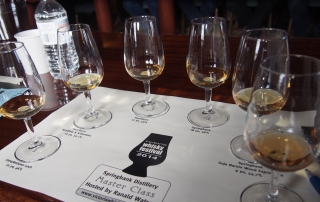
The most recent of these events was put on by whisky writer Ian Buxton at The Whisky Exchange near London Bridge.

I brought along one of my newest converts to whisky – Miss Andrea – to help me out in tasting drams from as far afield as Taiwan along with a group of other whisky lovers, such as Billy Abbott (ie: @cowfish).

We started the night on the English Whisky Company’s Chapter 6 release. This 46% whisky was the first official release from its St George’s distillery in Norfolk, and came onto store shelves in 2010. It is a light-straw coloured dram, with notes of marzipan, lemon, vanilla, pink peppercorns, paint and straw on the nose. The palate was slightly bolder, with spring, floral flavours to start and a peppery vanilla burst midway through the sip. Notes of strawberries dipped in caramel also came through.

Our taste buds next headed more than 4,200 miles westwards to Bardstown, Kentucky and the Heaven Hill distillery to try some Pikesville Straight Rye Whiskey. Ian told us he enjoys this dram because of its value for money – coming in at around £22, it is a very cost-effective bottle. Now, I’m not a massive fan of rye – the bread or the drams made from it. But this was an intriguing whiskey regardless with loads of clove-like spice and a hint of sweet peach lingering in the background of the nose. The palate, meanwhile, was bursting with peppermint caramels. It was a refreshing dram but I think I would prefer it as a base of a cocktail, rather than just drinking it straight.

Ian Buxton takes us through the world whiskies.

For dram number three, we headed back east across the Atlantic to Ireland to sample some Writers Tears whiskey, which is made from a vatting of single pot still and malt whiskies and comes from the Midleton distillery near Cork. The nose was warming and welcoming – it reminded me of two (nearly unexplainable) things: firstly, the smell of warm haystacks and a cat’s furr (cat owners who’ve ever picked up their furry friend when they’ve been sat in the sunshine might understand what I mean); and, secondly, there was a dash of caramel apple pops, which are a North American sweet. The palate was sticky and sweet, with loads of apple flavours and a heavy oiliness that coated the mouth. It finished on honey and hay notes. It was mine and Miss Andrea’s second favourite of the night.

Miss Andrea enjoys a dram.

Whisky number four took us over St George’s Channel into Wales to the Penderyn distillery near the Brecon Beacons. The Penderyn Madeira was most definitely the most divisive whisky of the night, with one outspoken observer declaring it the worst whisky he’d ever tried. I was not so angered by it. In fact, I didn’t mind it – it just wasn’t quite up there with the others. The nose was full of bananas and pineapple and the palate was sweet and spicy, with notes of peach and cinnamon and a bitter finish.

The most anticipated whisky of the night for me was Kavalan Single Malt, part of the collection from the first Taiwanese distillery, Kavalan, which produces nine million bottles a year. The distillery has been in operation since 2005 and has won numerous awards in its short lifetime. It is also a hugely popular visitor destination, garnering upwards of (a whopping) 7,000 visitors a day. The Single Malt is a gentle, well-balanced dram with notes of apples, pineapple and vanilla, while the palate reminded me of more of an Irish style, with light notes of lemons, honey and almonds. It was very pleasant but not outstanding. I’m keen to try the others in the range as I’ve heard they’re more exciting.

The final dram of the night was the powerhouse cask strength Ardbeg Uigeadail, a popular malt for good reason. The nose bursts with brine, and sweeter BBQ prawns, plus a wafting fresh smoky air scent. The palate has a great chewiness, with a real caramel sweetness that shines through the smoke. It’s joined by brown sugar and lemon pie notes, before being topped off with a grassy finish. Both Miss Andrea and I swooned over this dram – a definite favourite of the night.

And although we loved the last dram from more traditional Scotland, it was a fantastic look into a set of whiskies from across the globe. It excites me every time I am able to try such a range from other countries and seems to be yet another bit of proof that whisky is taking over the world!


Penderyn: Red Flag

November 19, 2012 in Reviews

During the recent TWE Whisky Show, I got chatting to Jon Bryant of blog, Livingroomwhisky.com and he mentioned to me a recent tasting he’d done of the new release from Penderyn called the Red Flag.

Very generously, Jon sent me a sample since I’d not come across it myself yet and I’ve been enjoying a dram or two of it.

As background, the Red Flag is a part of the Welsh whisky distillery’s new Icons of Wales range, which will eventually include 50 limited edition bottlings, each telling the story of an important historic occasion which the Welsh were a part of and which made an impact internationally.

The Red Flag release is in honour of a miner named Dic Penderyn who was executed during the Merthyl Rising protests in 1831. Miners in Merthyr Tydfil had been protesting against the lowering of their wages and general unemployment. During the protest, a red flag (which went on become the symbol of social protest) was raised for the first time in history.

The bottle tells the story behind this uprising and the box has an image designed by illustrator Andrew Davidson.

It has been bottled at 41% and is a bourbon whisky finished in Madeira casks.

When I first poured this, the nose was like being dropped into a vat of melting caramel. There were wafting notes of caramel coated bananas, then a slight tinge of leather bound books. I also had an image come to mind of a highway in Canada in the Rockies in autumn – how I can characterise that as a smell, I’m not sure but that’s also what the whisky seemed to hint of to me.

On the palate, my brain was even more perplexed – but not in a bad way. It was just very different than I was expecting and exploded through a load of flavour layers. Images of a fresh mountain lake setting in Canada, followed by an Easter egg hunt flashed through my mind as I held it in my mouth. There was a freshness to it at first, but then it went very chocolatey (like children’s Easter eggs) before moving into a toasted coconut flavour. It finished on a rush of peach juice – but, quite specifically, the powdered kind you mix with water (think peach Nestea or – for the Canadians reading – the peach drink from Tim Hortons). There was also a dabble of pastry.

This was a dram that baffled me. Both the nose and the palate had so much going on but in slightly different directions. It was intriguing and tasty – drinkable and one for pondering over.

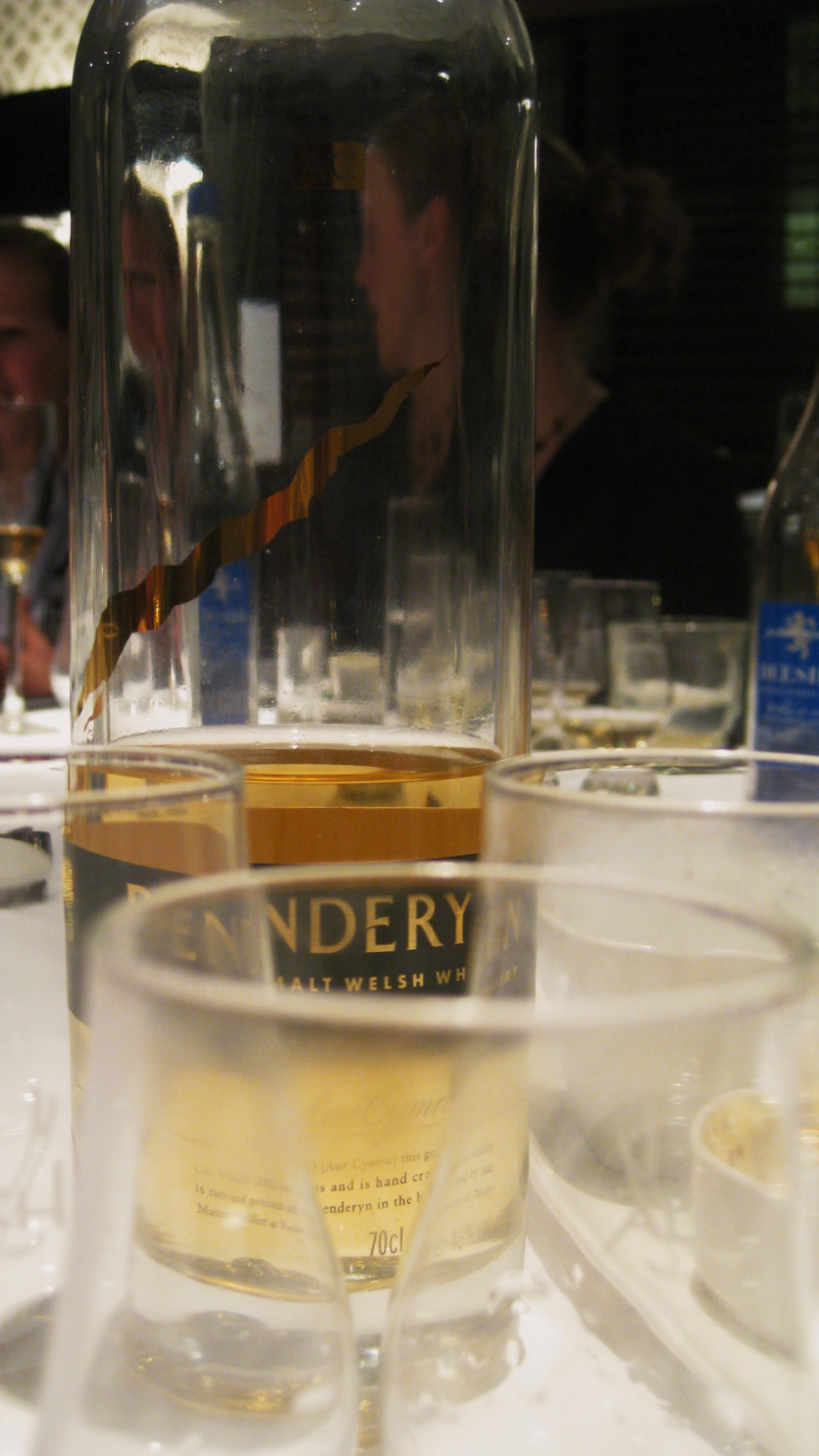
Thanks to Jon for providing the dram and the main photo.


Peaking around Penderyn

February 25, 2012 in Uncategorized

For ages I have been meaning to visit Penderyn Distillery. You see, my family all originally hail from just across the border in Hereford, so the region has been well-known to me since I was a wee lass. In addition, I have a rather Welsh name. It actually means, and I kid you not: “Friend of the Elves”. If that doesn’t conjure up images of Lord of the Rings, I don’t know what will.

As such, it was with excitement that I recently made my way over the Brecon Beacons National Park to visit the only Welsh whisky distillery.

For those of you that aren’t familiar with Penderyn, it began distilling in 2000 and has won numerous awards since, such as a gold in the World Whiskey Masters in 2011 for its bourbon single cask. It is distilled in the tiny spot of a village called, logically, Penderyn, which sits just inside the borders of the national park.

I met up with Gillian Macdonald, Penderyn’s distiller, who was to take me around the site. It was then I learned Penderyn was by no means the first Welsh whisky makers.

In actual fact up until 1903 there was a healthy distilling tradition in Wales. The last company to distill, the Welsh Whisky Distillery Company in Frongoch, was built in 1889 and produced Royal Welsh Whisky. However, by that point the Temperance Movement was in full swing, with devout believers promoting abstention from alcohol, especially in Wales. The sale of alcohol on a Sunday was forbidden from 1881 onwards and archives suggest by the time the distillery shut down nearly a tenth of the British public was teetotal.

It took nearly 100 years for distilling to return to Wales, although the Welsh were still having a subtle influence on the way whisky would be produced: records show that Evan Williams of Dale, Pembrokeshire, was one of the founding fathers of the bourbon movement in the US.

These facts and many more on the history of Welsh distilling can be found at the start of the distillery tour. Moving through this area, we headed into the heart of it all to watch the distillations being done.

Penderyn’s whisky differs from Scotch in that it uses two columns and one copper pot still which means the new make spirit is slightly altered from what you would find elsewhere. Gillian told me the company chose to do this because it would further distinguish them from Scottish or Irish whiskies  and because they had fewer regulations to adhere to, as they are not governed by the strict laws found in Scotland.

In addition, Penderyn diverges from the norm by taking a “cut” that is much higher in alcohol content. To explain: when the 2,500 litres of wash are put into the copper pot, they are heated and the liquid travels up the columns before condensing and moving back down. The “cut” is the alcohol that is selected to go into the final new make spirit which will then be transferred to casks and made into whisky. Penderyn takes its cut at alcohol levels of between 86% and 92%, which is much higher than most Scottish or Irish whiskies choose. This results in a lighter, purer base spirit, in the end creating a whisky with a pleasantly light signature flavour.

So what exactly is the whisky like? Well, I’ve tried Penderyn many times before but there is something rather romantic about trying it straight at a distillery rather than out of a bottle from my local supermarket. So, it tasted even better than normal. I’m already a big fan of both their peated (which I wrote about in this piece) and their signature bottle, the Madeira finish. But I had yet to taste the Portwood, which is only available at the distillery or abroad. I should mention this is not the same as the Port Wood Single Cask, which was named European Single Cask of the Year in 2009. But, regardless, this one was beautiful. It was slightly woody, in a nice way, like when you chew an ice lolly stick after finishing the ice cream. From some distilleries I could imagine it being too sweet, but this one manages to avoid being sickly because of Penderyn’s lighter signature style.

And, excitingly, during a tour to the storerooms a couple of miles down the road, Gillian passed on a sample of the latest distillation of the Portwood. I will be reviewing it soon but I can currently leak that it is sublime. Even better than the first. In fact, it’s sat beside me as I type at the moment and I’m having difficulty stopping myself from drinking it down in a dash!

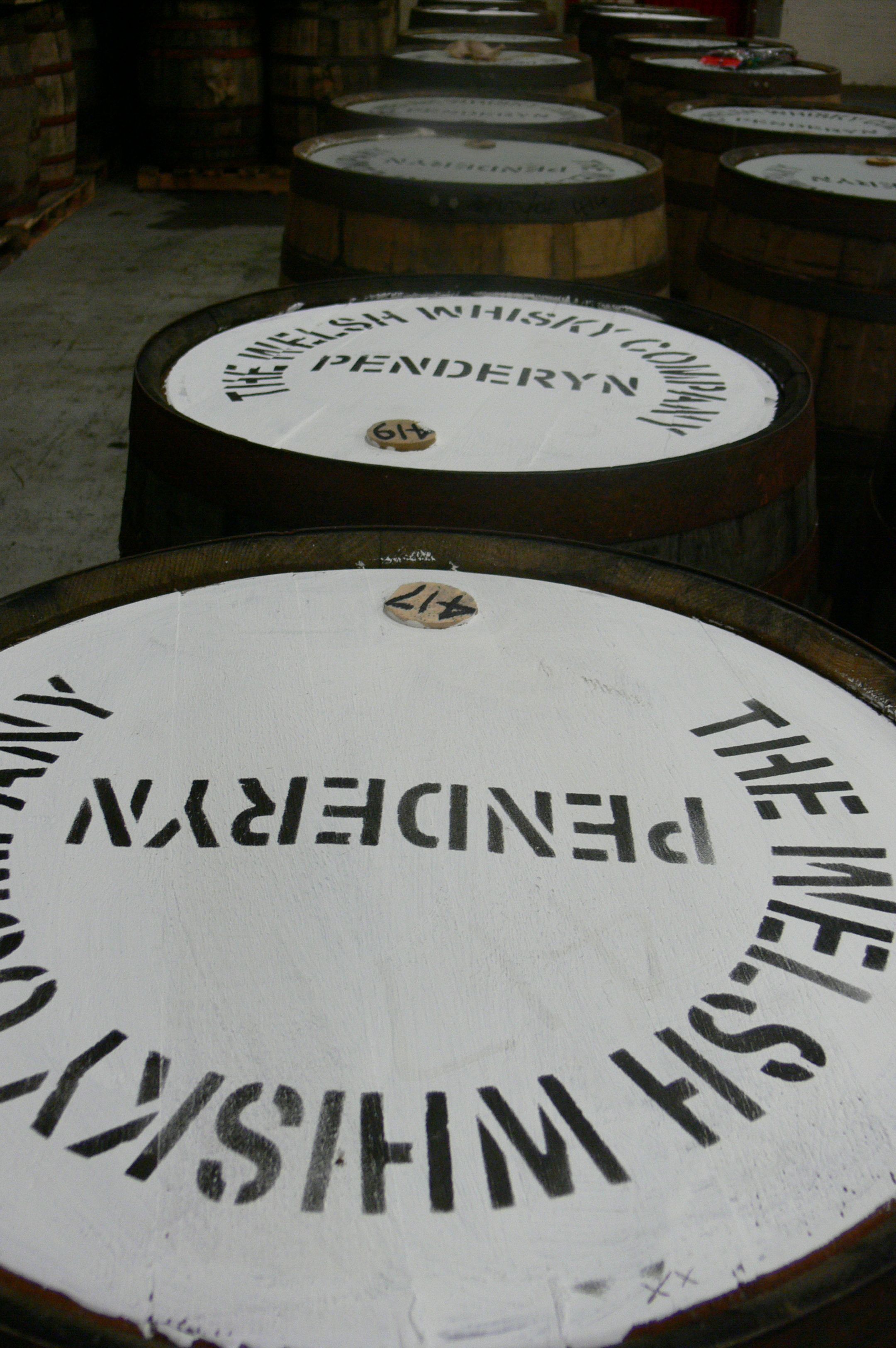
Over at the storerooms I was amazed to see all of the stock – and to realise that Penderyn is still very small. To me, the hundreds of barrels looked like a treasure trove, but as Gillian pointed out, their production capacity of three casks a day is but a mere drop in the whisky production world.

Still, it was nice to get a look in behind the scenes of such a great distillery. So, here’s a cheers to the Welsh! And the elves. I can’t forget my friends…!


Whiskies for Beginners (in time for Burns Night)

January 24, 2012 in Uncategorized

Robbie Burns, the 18th Century Scottish Bard

Over the past few days, the whisky Twittersphere and blogging world has been all a flutter discussing who is doing what for Burns Night – there will be whisky tastings, whisky pairing dinners, dancing and much addressing of the Haggis all celebrating the Scottish Bard, Robbie Burns (for more info, see here). But, the 25 January celebrations are not as well known to those that are: a) living outside of the UK; or b) non-whisky drinkers.

But here at Miss Whisky I’m all about converting new people to the drink all over the globe. So, with that in mind, I started thinking about what whiskies are great to get beginners going in time for tomorrow’s celebrations – or at anytime in the future!

As such, read on about some of the best whiskies I believe might just get your taste buds and your heart firmly in the whisky fan club!

The Blend: Grant’s Sherry Cask Finish:

You may know Grant’s as a cheap, run-of-the-mill blended whisky. But, the company is much more interesting than a first presumption might allow. To start, Grant’s (or William Grant & Sons) is still a family-run business, despite its status as a global giant selling 54 million bottles yearly. Also, its portfolio includes a whole range of whiskies, which are more carefully crafted. And finally, the Sherry Cask Finish is a well-made blended whisky and an affordable place to start for someone new to the drink. Unlike some of its off-licence brands, this has been matured in Spanish Oloroso sherry casks for four months after its initial ageing to level out the bite and add a softer, warmer flavour to the finish. Think: rich pudding fruits, vanilla and subtle oak. It’s an easy-drinking blend to get a beginner started and comes in at an affordable £20 or less in most shops.

The Traditionalist: The Balvenie DoubleWood:

The Balvenie is big on pride of craftsmanship. It runs awards to celebrate people still creating products by hand and anyone from the distillery or representing it will wax lyrical about how much work is put into making this whisky in a traditional way. The distillery grows its own barley and uses the old floor malting technique (whereby the barley to be used in the malt is germinated for a week on a stone floor at the distillery). All this work produces, not only, a lovely story but a lovely whisky. The DoubleWood is just one of the company’s many expressions, but it’s a great starter single malt because it combines the flavours of both bourbon (from the ex-bourbon casks it’s aged in) and sherry (from the ex-sherry casks it’s finished in) to give a greater depth of taste. It’s very smooth, with hints of nuttiness and spice, with a long finish on the tongue. It varies in cost from £29 to £33.

The Triple Distilled: Auchentoshan Three Wood:

Taking that idea of multiple cask flavours one step further is this bottling from Auchentoshan (pronounced: AW-KEN-TOSH-AN). The Lowland company triple distills all of its whiskies – which means it goes through the distillation process three times, creating a very smooth whisky and helping to eliminate that alcoholic bite that puts many first-timers off of whisky for life. But, it’s the Three Wood that is a great place to start when discovering this brand because, not only is it triple distilled, but it is also matured in three different casks: American Bourbon, Spanish Oloroso Sherry, and Pedro Ximénez Sherry. This results in a lip-smackingly rich golden-brown whisky, with notes of raisin, brown sugar, hazelnut and caramel. Delicious! It costs from £34 to £42 from whisky shops.

The Classic Malt: Oban, 14-year old:

You may not have heard of Oban but it’s a great little dram for tasters looking for something a bit more special without breaking the bank. Oban is one of the six classic malts, deemed so in the ’80s by United Distillers (now a part of Diageo Scotland). Hailing from the western Highland region, Oban is a light and refreshing yet complex whisky. It has hints of smoke on the nose, but is a mouth-filling, citrusy-sweet dram on the palate so it doesn’t overwhelm someone new to the drink. This one retails at a price of between £34 and £40.

The Outsider: Penderyn Peated:

Now, it’s not only the homeland of Robbie Burns that produces whisky in the UK. In the past few years, both the Welsh and English have gotten into the business and started making their own. Penderyn is the only distillery in Wales and was launched in 2004, winning numerous awards around the world since. The company produces three expressions: the Single Malt, the Sherrywood and the Peated. The latter is a great example of a whisky that changes perceptions about the “smoke factor” of the drink to newcomers. The thing is, most people believe an overpowering smoke smell and flavour is what dominates the majority of whiskies. But, in actual fact, while there are extremely smoky (or peaty) whiskies out there – such as ones originating from Islay like Ardbeg or Laphroaig – many more take on much lighter flavours. The Peated expression from Penderyn is a perfect whisky to try if you’re interested in sampling a smoky whisky without feeling like your taste buds have been blown out. Unlike most peated whiskies, Penderyn does not dry its malt over top of peat bricks heated by fire, which is the traditional way of imparting this flavour into whisky. Instead, it takes old casks that have already housed peated whisky, and matures its spirit in them to give a much subtler note of peat. This creates a highly flavourful, oily, smoky whisky without too much bite. The style has won it many awards and many more fans, and retails at between £37 and £40.

Dramatic Whisky

October 29, 2011 in Reviews

(First published on my Gwitlypleasures blog, September 2011. To see original post, go to: www.gwiltypleasures.com)

Over the years of enjoying the gorgeous drink that is whisky, I can clearly say I have learned that whisky is dramatic. In fact, seeing as Mirriam Webster defines the word as “striking in appearance or effect” and seeing as whisky is, most often, both – especially the latter after too many top-ups – I was glad to stumbleupon someone seizing on this fact to promote greater education about the drink to the masses.

This person is drinks-industry veteran Mark Thomson, who heads up the aptly named company: “Dramatic Whisky“. Its goal: “To break down the stuffy, dusty walls surrounding the mystique of Whisky and allow everyone the opportunity to discover and understand this fabulous liquid…”

I was curious to find out more and, after an invitation from Mark, headed to one of his latest tastings at the lovely Liberty Lounge on Bell Lane, just down from Spitalfields market.

I was not disappointed, nor were the 21 other people who, later, all seemed to compliment Mark’s lecture as they wobbled out the door.

But back to the start. The venue was perfect for the evening: trendy but cozy, all dark-wood, dark-banquettes and dark couches, mood-lit by flickering candles. The guests made small talk over the lounge music bubbling across the stereo and the whole place felt far from anything stuffy or old-school.

Soon enough, we got down to the evening’s main event: the tasting, which comprised six whiskies. Interestingly, Mark started us out – after a comedic talk on how whisky is made and its history – with a Grant’s, something I haven’t drunk since a rather unfortunate evening as an 18-year-old when I glugged a litre of the stuff with a friend during a beach party in England’s south. It put me off whisky for a good six years, and I was doubtful of trying it again. Luckily, I was pleasantly surprised: it had nice caramel and vanilla notes, was smooth and left a subtle pear taste of the palate. This was certainly due to the fact it wasn’t any bog-standard Grant’s but a posher, sherry cask finished blend, and my memories of one of my worst teenage hangovers were not brought back. Putting this whisky first was part of Mark’s goal to de-snobbify whisky drinkers who think supermarket-shelf stuff is no good and I think it did the trick.

We continued with a light, young, appley Glen Moray; Penderyn’s delicious peated malt (still one of my personal favourites); a rich, sherry-casked 12-year-old Highland Park; a nutty, oily 18-year-old Highland Park; and, finally, a Christmas-cake-in-a-glass 18-year-old Glenlivet.

Throughout the event, Mark tried his best to get the crowd chatting and spent much time joking about the attempts of the evil English to control and regulate distilleries in the 18th and 19th centuries. It was an evening choc-a-bloc with interesting information delivered in a relaxed manner, using the latest technology (he brought up pictures to illustrate points on his iPad) in a fantastic hidden-away bar I was very glad to discover. There was even a large plate of flavourful Moroccan food to finish.

And finally, it was dramatic in as much as it was the antithesis of what many whisky evenings can be: older, stuffy, aristocratic and snobby. We had fun, drank lots and got to love new whiskies. Gwiltypleasures was definitely satisfied…she can only hope Mark will continue to get the “water of life” flowing to even greater numbers of the UK population…

Peatastic Penderyn

October 25, 2011 in Reviews

  “We said we were never going to produce a peated whisky,” explained Gillian MacDonald, distiller at Penderyn, the country’s only Welsh whisky producer. “It happened by complete fluke.”

Fluke it may have been, but one that has proved incredibly popular – even by peat-hating malt drinkers like myself.

As a whisky-loving female, I have tried many a malt, but have still never warmed to the idea of the smoky peated Islay whiskies. They were shunned, passed to the unwanted pile – until now.

At a recent women’s only (!) whisky tasting at the Albannach bar in London, I discovered the beauty of Penderyn’s Peated whisky. But, as MacDonald told the tasters, it should have never happened.

Whiskies pertaining a peaty presence do so because the barley used to make it is first dried over bricks of peat, which infuse the flavour right from the start.

For Penderyn – a staunchly proud whisky maker “down in the valleys” – this technique was not one it wanted to apply because the distinctive flavour is too associated with Scotch.

So how did they do it?

“We re-use casks. So, we rang Scotland and asked for some ex-Scotch casks, specifically saying we don’t want any filthy peat casks! But somehow they slipped in a few and we didn’t smell them beforehand so they got through,” said MacDonald.

After four years of putting the peat-flavoured whisky to one side, MacDonald says they finally decided to come out with a special edition, one-time only bottling of the stuff.

Unforunately, the entire whisky world fell for it, with one famous reviewer giving it an incredibly high score on the whisky scale of 92.5 out of 100.

And I can understand why – the subtle peat flavours are perfect for those wanting a bit of smoky notes in their malt, without it overwhelming the mouth with the firey, earthy intensity common to the more traditional blends.

I can only imagine MacDonald will be on the phone more frequently, asking for those pesky peaty casks to continue the tasty delight that is the Penderyn Peated.

From my Gwiltypleasures Blog, first posted April 2011. For direct link, see: www.gwiltypleasures.com.