You are browsing the archive for Inverness Archives - Miss Whisky.

Trying Tomatin

November 15, 2012 in Uncategorized


When I recently attended the TWE Whisky Show in London, I went with the plan to try only whiskies I’d not had the chance to sample before to help broaden my tasting experience.

One such brand that I came across when I first arrived at the show was Tomatin. The whisky – which is made in the Highlands, just south of Inverness – has been made since the late 1800s. But it wasn’t until 2004 that the company’s single malts hit the shelves as it had focused on selling whisky in bulk to go into blends before that. Rewind 30 years to 1974, and it was one of the biggest distilleries in the world, with 23 working stills. It went into liquidation in 1984 before being bought by Japanese firm, Takara Shuzu Co in 1986. Ten years later J&W Hardie became a part of it as well, and in 2002 the stills were decreased down to 12 and a focus was put on single malts.

Alastair, a UK sales manager was on hand at the stand to take me through the drams and we started with the 12 year old – a 40% whisky which has a six month finishing period in sherry casks. On the nose, it was gentle with subtle hints of butterscotch and wheat. The palate was filled with sweet lemons, cake, golden raisins and a teeny hint of smoke. A great summer time whisky, I thought. It retails around the £30 mark.

Next up was the 15 year old – this is a 100% bourbon cask whisky bottled at 43%, which has been available since 2009. Alastair said, “I describe it as an old-fashioned whisky.” On the nose it was much fruitier than the first, with oranges and pineapple shouting through against a backbone of vanilla. The palate was fresh and spicy, with that orange drifting around the mouth as well. It had a very clean finish. This one will set you back around £43.

Following this, I sampled the 18 year old. This was the first non-chill filtered whisky produced by the company. It spends 16 years in bourbon and a further two years in Olorosso sherry casks and is bottled at 46%. I found this whisky much heavier on the nose – it was thicker, sweeter, more caramelised and raisiny. But on the palate, it was surprisingly light and not as sweet as I was expecting. Like the others, it had a clean finish. It would cost around £50.

While it seemed logical to continue the age progression onto the 21 year old, Alastair instead steered me to the 30 since the younger whisky is cask strength. Only 1,500 bottles of the 30 year old are released annually. It is bottled at 46%. It was, as it turns out, one of my favourite of the whiskies I tried that day. On the nose it was full of banana peels, mango, pineapple and vanilla. On the palate, there was a crescendo of tropical fruits: pineapple, cherry syrup, mango and a light spiciness. It was beautiful and so sprightly for a 30-year old. Very impressive indeed. It’s £122 so not one to run out and grab, but if you’ve got a Christmas wishlist I recommend.

After the 30 year old, I moved back in age to the 21 year old. This special edition cask strength whisky has a limited release of 2400 bottles a year. It is made from a mix of whiskies aged from 21-24 years, and a combination of six bourbon casks and one sherry cask. Bottled at 52%, this was a cakey, caramel apple and licorice spice whisky on the nose. The palate surprised me – especially at that strength. It didn’t come off as being 52% at all. It was creamy, with notes of caramel flan, custard, delicate fruits and a wafting smoke. This limited edition retails at £125.


And finally, there was just one more dram: the granddaddy of the bunch, the 40 year old. This bourbon cask whisky was distilled in 1967 and there has been a limited release of 1614 bottles of the 42.9% whisky. To my nose, this was a very “traditional” dram. It smelled of wood, leather, brown sugar, dust and oranges – a belter of a dram, with considerable oomph from the wood. The palate, however, surprised – there were sugar and cream notes, but that fruitiness which seems to be a typical style of Tomatin came through again near the end. It was lovely, but I still preferred the 30-year old. This whisky retails at £425 – not bad for a 40-year old.

All in all, I was very glad to have popped by the Tomatin stand. I’d not come across any of the line before in my whisky adventures and I feel I’ve found a new quality dram to look out for.

Balblair: Capturing a Moment in Time

July 24, 2012 in Uncategorized

Every once in a while, I find myself utterly entranced by a whisky. For a magical moment, the room around me goes still, my chattering brain slows and I sit silently in wonderment. It’s rare but, when it happens, it can transport me far away – such is the power of a truly amazing dram.

And so, it was while I sat in the time capsule room at the Balblair distillery that I found myself floating off to a warm meadow in the middle of summer. In my hand sat the brand’s new release, the 1969 vintage.

But it was so much more than whisky in a glass. In it, I found myself listening to the tip-toeing of meadow deer, feeling the gentle depth of summer sunshine heating my cheeks, smelling the bristly, dusty notes of animals and drying wheat. Another sip reminded me of eating liquid honey sticks, the gentle waves of sweetness undulating over my tongue. Then bursts of butter melted on white bread, pain aux apricots and orange bitters created a summer brunch in my mouth before everything finished on a flourish of smoked salmon.

I sat, mesmerised, for a good 15 minutes. When finally I came to, I realised my distillery visiting compatriots had left the room and the table was being set, the staff moving delicately around my hypnotised frame.

It’s those moments that I note down, that I associate with the power of the delicate beauty of this subtle drink.

I had come up to Balblair that morning. An overnight train with 10 journalists ensured there was much whisky drunk before we’d even set foot at the distillery; a breakfast of bacon rolls, paracetamol and drams meant I was soon back in the swing of things.

Balblair is one of those places that make you smile for its loveliness. It’s in its own sphere, hidden on the shores of the Dornoch Firth. It’s so beautiful that director Ken Loach decided to set part of his latest film, The Angels’ Share, there. If you didn’t catch it in cinema, definitely watch the DVD. There’s a reason it won the Jury Award at Cannes this year.

Owned by InterBev subsidiary Inver House Distillers since 1996, Balblair turned the industry standard of age statements on its head in 2001 when it began to only sell vintages. These are named by the year they were made, not by the fact they are 12, 15 or 21 years old. The company tries to release at least one new vintage every year, but says it rules itself by the idea of ‘vintages timed to perfection’ meaning the whisky tells them when it’s ready, not the other way around and doesn’t come out of that cask until master distiller John MacDonald declares it to be done aging.

The day of our visit, John was on hand to take us around the distillery. We were also joined by acclaimed whisky writer and personality, Charlie Mclean, who also appears in the film as a whisky expert. Despite the rainy day, I was keen to wander around the site and learn just what the distillery – which has been on its current site since 1894 – had to offer.


The water for the whisky comes from 4.5 miles away, and is gravity fed to the site. The distillery did floor maltings up until 1975, but now has its malt delivered from Cawdor in Nairn.

Inside, amongst the heady smell of yeasty brew, one finds six wooden washbacks made from Oregon pine, all of which were replaced as new in 2001. To the mash, John said he adds 21 litres of liquid distiller’s yeast that bubbles and spits for a 50 hour fermentation period. Finally, in the still room one finds stocky, wide copper stills that do a three and a half hour distillation.

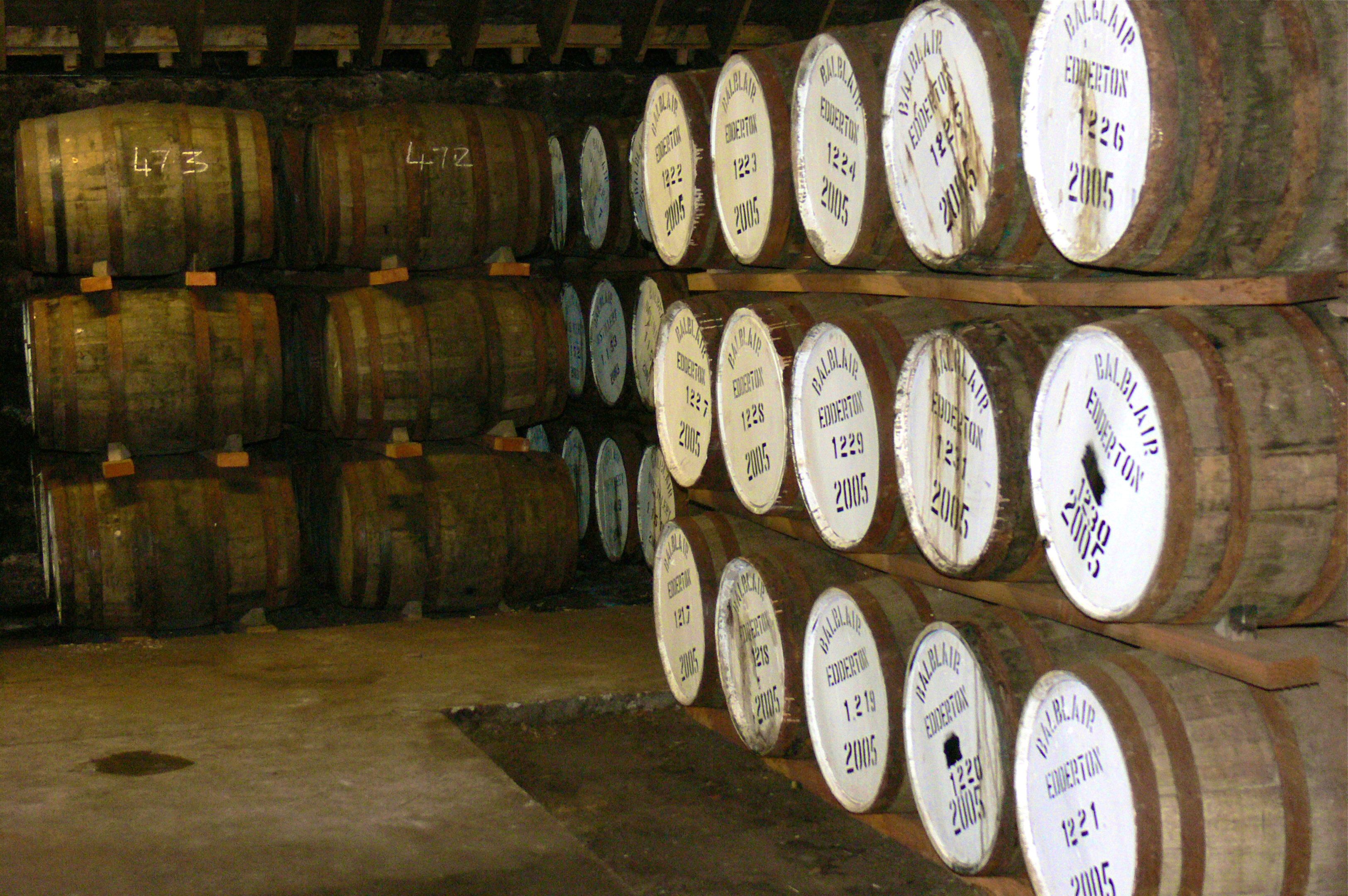
Balblair has eight warehouses on its site, in which sit a beautiful selection of 26,000 casks, 97% of which are first or second fill bourbon, the other 3% of which are sherry casks made from ex-European and American wood. It’s, most certainly, an alluring sight.

Since John was faced with lots of questions from us nosy journalists, it was refreshing to see him answer our ramblings in a relaxed and honest manner. He is obviously passionate about what he does (which most master distillers tend to be) but he comes with a genuine love of it that would be hard to fake.

When asked how he felt about the company’s reliance on vintages, he said: “It’s not marketing BS. There’s no way I’d put my nose or name out there for something that wasn’t a good whisky. I’m not a good liar.”

Fair play, I thought.

But visiting the site wasn’t the only part of the day. There was also the additional opportunity to do my own hand bottling (!) which visitors can also participate in. I am now the VERY proud owner of bottle number 3 of a 1992 vintage from cask number 74.

After all of the enjoyment of visiting the site, it was time to try some of the whiskies. The company’s current standards (2001, 1989 and 1978) are to be replaced by new vintages from 2002, 1978 and 1969, all of which I review here.

It was a wonderful distillery visit and one that will live in my memory for a long time. Perhaps appropriately, I later learned that from the distillery one can see the Clach Biorach, an ancient standing stone that was “used to mark arrival and passage of special moments in time”. Trying the 1969 vintage was, most definitely, a special moment in my whisky tasting repertoire and made all the more magical by the surrounding significance of history that is a part of this place.