You are browsing the archive for Glenglassaugh Archives - Miss Whisky.

Ian Buxton on whisky, writing and investment

July 30, 2012 in Uncategorized

Ian Buxton is a well-known whisky writer and commentator. He’s worked in the whisky industry for more than 25 years, first on the marketing side and now in the arena of whisky development, consultation and writing.

He has recently released his latest book – 101 World Whiskies to Try Before You Die – which you can enter to win a copy of, below. Other books include a history of Glenglassaugh and a 175th anniversary book on Glenfarclas, among many others.

Here, he talks about his life in the industry, his surprise at how things have changed and why he is against whisky investment.

*      *      *      *      *

Thanks for speaking with me Ian. To start, you’ve just released your new book, 101 World Whiskies to Try Before You Die. Why now?

It’s a sequel to the first 101 Whiskies to Try Before You Die.That was released about two years ago and, though it’s still selling well, we felt that the interest it created combined with the explosion in new ‘world’ distilleries – and the fact that many of their products are now reaching the market – meant it was time for a fresh look. And people were kind enough to ask for a new book, which was flattering.

What was your most exciting discovery when researching for the book?

I think I’ve said elsewhere that I learned a huge amount working on this book – and was constantly reminded how much there is to learn. I met some really great people and tried some amazing whiskies, particularly various rye whiskies which hugely impressed me. But above all, I was struck by the pioneering and entrepreneurial approach of some small craft distillers.

Going to Switzerland and Finland, and meeting small distillers was tremendously exciting and rewarding.

Which country do you think has the most potential for whisky development in the next five years?

I don’t actually see any geographical boundaries or limitations on production any more. Take Taiwan for example. The investment at Kavalan is at a very serious and professional level and they are making really interesting and high quality whisky just six years after starting from scratch. The next stunning whisky could come from anywhere in the world and surprise us all.

What challenges does the emergence of a more globalised whisky industry present for Scottish producers?

Scotland has a huge lead in image terms – established distribution and brand strength, for instance. So, I think its position is a strong one for the foreseeable future, especially in blended whisky where the bulk of sales remain.

But, world producers have greater freedom to innovate and, in many cases, enjoy lower costs of production so could – in the long term – squeeze Scotland from the bottom on price and from the enthusiast’s perspective, beat Scotland on innovation and exploration. Just look at Snow Whisky from the Whisky Castle in Switzerland or the experimentation at Balcones Distillery in Texas. Tiny, trivial volumes [are being produced] but they excite connoisseurs in a way that’s increasingly difficult for Scotland to emulate.

You’ve been involved in the whisky industry for around 25 years. Have you been surprised at the rise of single malt sales and emergence of craft distilleries in the past few years?

I think we all have. When I entered the industry the trend was all to consolidation and whisky was in decline, though the ‘drink less but better’ message helped single malts back then. The idea of a vigorous boutique distillery movement would have surprised everyone.

You speak out vociferously against whisky investment. How does this play with the industry? Are you worried you’ll be proved wrong in 10 years’ time?

Well, if I am proved wrong, it won’t be the first or the last time.

I don’t know how it plays with the industry – some people have privately agreed with me; others clearly don’t. Only time will tell.

I maintain that whisky only acquires meaning when drunk and thus its apotheosis comes at its moment of destruction – a very poignant consummation of our relationship with the cratur. It’s a romantic view, I agree, but there are more than enough pedestrian and material things to invest your money in without intruding on a thing of grace and beauty.

What’s been the most rewarding achievement of your career thus far?

I will always be very proud of tracking down the real identity of ‘Aeneas MacDonald’ and getting his book republished. Whisky (1930) was the first modern book on the subject and the first written from the consumer’s point of view. It is still very well worth reading.

And, going back to my time as marketing director at Glenmorangie, I introduced what proved to be the very first, branded single cask, cask strength bottling – The Native Ross-shire Glenmorangie. Lots of people do single cask, cask strength bottlings now; at the time this was quite controversial, not widely understood and criticised by a number of people in the industry. I was always very proud of it and the fact I wrote the copy on the label.

Is there a whisky you’ve yet to try that you’re keen to get your hands on?

Oh gosh! They just keep coming.

What is one of your favourite memories of whisky drinking?

Trying some of the last few casks of old Glenglassaugh when I was involved in restarting the distillery. No one really knew what this whisky was going to taste like, so it was an incredibly exciting moment. The fact that the whisky had aged superbly well was a delightful bonus – and a considerable relief to the investors!

What makes you love the whisky industry?

I get paid to do this stuff!

*     *     *     *     *

Interested in winning one of five copies of Ian Buxton’s new book, 101 World Whiskies to Try Before You Die?

Then email your answer to the following question to: misswhiskycomp@gmail.com by the 10 August!

Q: In what year was Ian Buxton’s previous book, 101 Whiskies to Try Before You Die, published?


Glenglassaugh’s Phoenix

December 15, 2011 in Uncategorized

After more than 25 years, Glenglassaugh Distillery will officially rise from the ashes with its first bottling due to take place Friday.

The distillery – which was reopened in November 2008 after 22 years of neglect – is located in north-east of Scotland near the border of Speyside in the small town of Portsoy. It was first established in 1875 and operated for more than 100 years until it was mothballed in 1986.

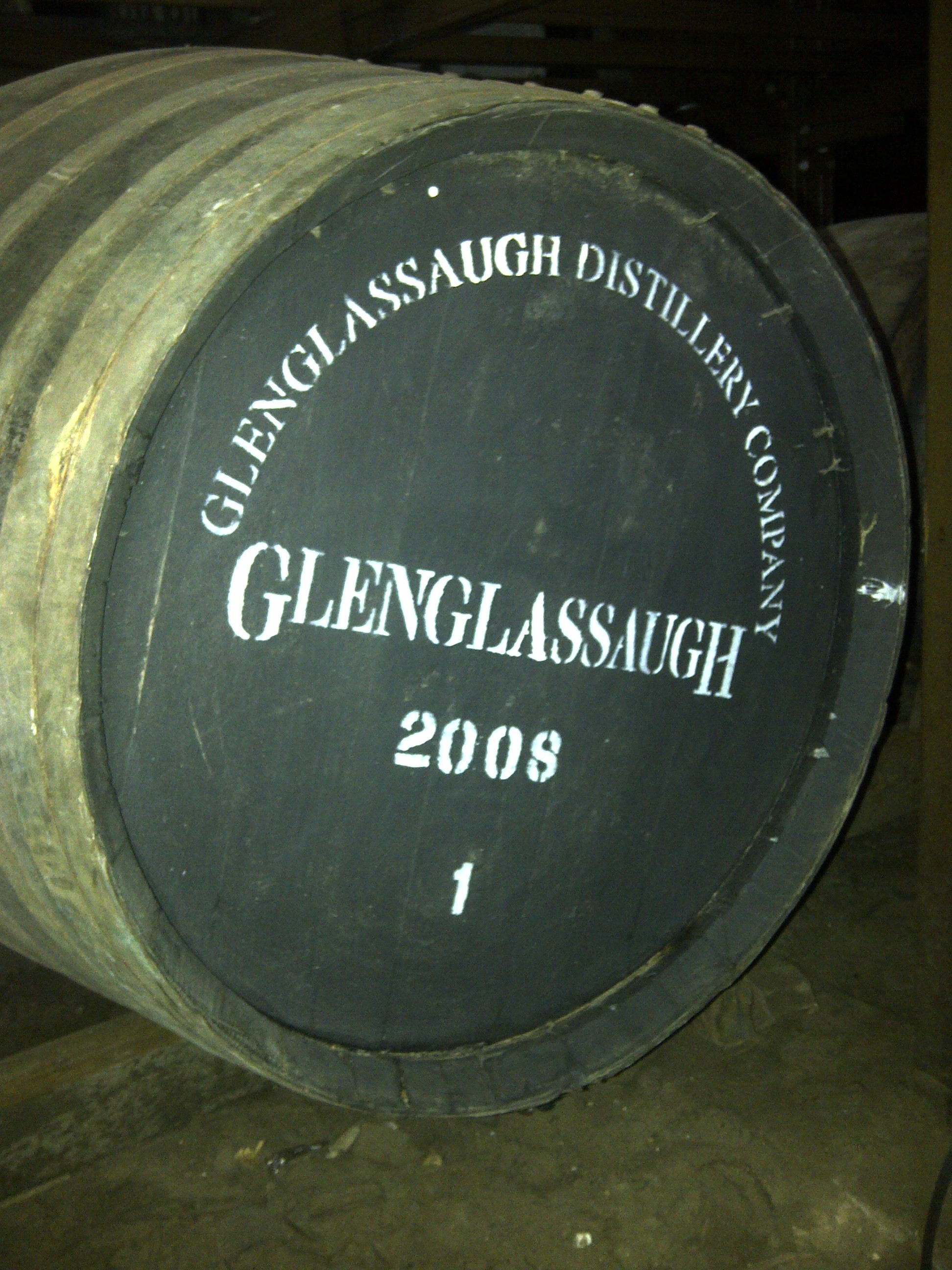
It was left like that – with roof and walls crumbling – for 21 years until a group of investors decided to see if its stock had the quality worth taking a monetary leap on. After deeming it rather tasty, indeed, the distillery was purchased and reopened, with the first cask being filled on the 16 December, 2008.

The first cask from the revived Glenglassaugh Distillery.

I first learned about Glenglassaugh when I attended this year’s TWE Whisky Show. There I met Ronnie Routledge – the distillery’s customer account manager and general whisky expert – who gave me a wee sampling of the fantastic Chosen Few bottling (a 35-year-old oakey, appley whisky) and also a try of the Fledgling XB. Despite being only a year old, it was full of flavour: caramel, soft fruit, and an aftertaste of apricot and camembert. A sign of good things to come, I thought.

Since re-opening, Glenglassaugh’s older stock has won many awards, including “Best Single Cask Scotch Whisky” and “Best 40 Year Old at the Wine and Spirit Competition along with being voted best 40 year old Scotch in Jim Murray’s Whisky Bible 2010.

The distillery prides itself on trying to keep to tradition by basing current production on the old production manuals found upon purchasing the property. They still use a traditional dunnage warehouse from 1875 and do their bottlings by hand.

The authentication certifiate that will come with the first bottling.

So, it is, no doubt, with pride that the first bottles will be filled and distributed to those lucky enough to have had the forethought to purchase one of the 650 available. The whisky was left in a refill butt until December 2010, and was then matured, half in a first-fill ex-Palo Cortado sherry hogshead barrel and the other half in a first-fill ex-Pedro Ximenez (PX) sherry hogshead, before being transferred back into the original butt to merge the flavours over three months (from September to December this year). Each bottle will come with its own certificate of authentication showing this was part of the distillery’s first foray into fresh stock.

Next year will see a new product – Revival – released and, already doing well off the back of the original stock, Glenglassaugh will now be able to show it has fully risen from the ashes to fly high, as it was always meant to do. There’s something rather lovely about it all, Miss Whisky thinks!

For those wishing to purchase a bottle, head to the online shop at www.glenglassaugh.com. The 700ml bottle retails at £90 plus shipping and will also be available directly at the distillery after the 19th December.