You are browsing the archive for George Grant Archives - Miss Whisky.

2003 Glenfarclas Family Cask: Nickolls & Perks

April 22, 2013 in Reviews

The Glenfarclas distillery in Speyside is a great favourite of mine, as are the malts it produces. While I normally shy away from heavily sherried whiskies, for some reason most of the range that this family-owned distillery produce really hit home for me.

I visited last year and managed to try a huge variety in a tasting with George Grant – the company’s brand ambassador and great-great-great grandson of the original owner. My firm favourite has been the 15-year old but the 105 cask strength is also up there.

The company has a large range, including something called The Family Casks, which started out with one bottling of single cask whisky from each year from 1952 to 1994 and now includes seven more releases. If you’re ever in London’s Soho and near The Vintage House, the members’ club upstairs (the Soho Whisky Club) has them all displayed. So, when the folks at specialist wine and spirits merchants Nickolls & Perks told me they had bottled a 2003 selection for their customers, I was keen to give it a try.

This 2003 Glenfarclas was bottled at 57.5% and comes from cask #1448. Here’s what I thought of it:

Glenfarclas Family Cask(C): Melting brown sugar

(N): Almond cake, chewy grainy marzipan, a bit of chocolate and a nice bite because of the higher abv. More orange peel notes come out with water.

(P): A surprising lack of burn on the palate makes for quite a suave whisky. Notes of juicy oranges to start with sherry kick that follows. Mid-sip there is brown sugar and sour plums. With water some bitter notes emerge with addition of dark chocolate, orange and cinnamon.

(F): Woody oranges

This is a lovely bottling from Glenfarclas and while it’s not my favourite (the 15 continues to hold that spot) it is intriguing and very palatable.

For more information on the whisky, including George Grant’s tasting notes and how to order, head here.


Glenfarclas family tales

June 8, 2012 in Uncategorized

“I remember being eight years old and going to the family graveyard and seeing four graves with my name on. Things looked up when I was 14 and I went to the cask house and found 55,000 casks of whisky, also with my name on.”

George Grant’s tales of working for the “family business” often take these comedic twists as I discovered recently during a tour and tasting at Glenfarclas Distillery during the Spirit of Speyside Whisky Festival.

The Grant family has owned the distillery since 8 June, 1865, when it was bought by John Grant and still operated, in part, as a farm. He sent his son George (the current George’s great-great-great grandfather) to manage the lands.

The distillery has been passed down to the first son in every new generation since, with George’s father John (yes, more Johns and Goerges!) running Glenfarclas now.

The distillery has seen its fair share of difficult times in the interim. It was nearly pulled under by the Pattison scandal of the late 1800s – which saw the distillery and trade boom until it was discovered the Pattison brothers (with whom the Grants had a big partnership) were running a Ponzi-style scheme selling and re-selling the same casks of whisky to unassuming buyers. The ‘Pattison Crash’ had a fundamental impact on the whisky industry of the time and Glenfarclas, with 10 other companies going broke and latter deciding to avoid partnerships for the future, one of the main reasons why it is still independent today.

The distillery is set within a peaceful, mobile-phone free country landscape called “The Glen of the Green Grass” with Ben Rinnes to one side and rolling hills to the other. On a tour around the grounds, George explained the spring water for the whisky comes off of the famed “whisky mountain”. Interestingly, everything was originally built on a downhill slope so that no pumps would be required to get the water to the distillery.

Inside the dark grey stone buildings of the distillery, one finds an attractive layout with bright red peaked cladding running around the roof of the mash house and fermentation room. Glenfarclas ferments its wort for three and a half days, using liquid yeast for the process. The still house, meanwhile, comprises six stills (or three pairs) which create low wines of around 26% and a final spirit of 68%.

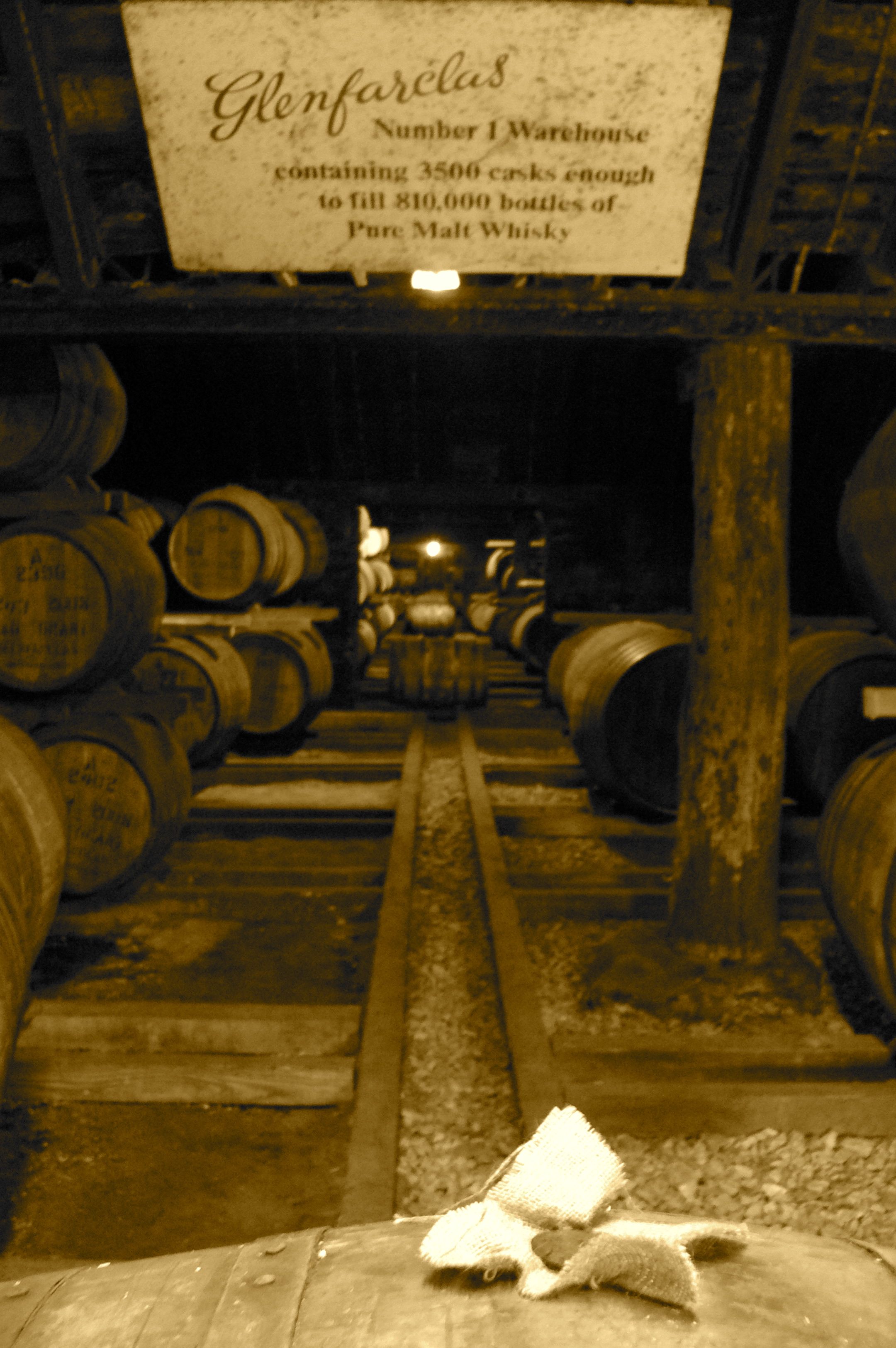
But it is perhaps inside the cask house where one finds the most interesting parts. Because it is a family company, there are complete casks going back decades. George calls this a bit of a “generation game”.

“I’ll get to take credit for the whisky my grandfather and father made. And hopefully, I’ll be dead before anyone notices any mistakes in my whisky!”

One of the upsides of it being all controlled by one family, he said, is the fact they can have more say around pricing of those older stocks of whisky. The 40-year old, for instance, costs around £280 which is far cheaper than many 40-year old whiskies one will find (unless they come from Aldi of course!).

“I wanted people to bu this and drink it,” he said. “I didn’t want it to sit on a shelf and not get drunk.”

During a tasting, I had small sips (I was driving) of the 15 year old, 21 year old and 40 year old. My favourite? The 15.

This dram was filled with notes on the nose of soft grainy fudge and a hint of brine. On the tongue, there was a bursting of the grain that was like firey sugar and juicy wood. It finished with a salty, bitter taste at the back of the palate. I loved it.

The whisky has an ABV of 46% and George said there was a very particular story behind that percentage.

“My grandfather wanted to give his friends a gift. So he opened a cask but at 53%ABV he didn’t have enough for all of his friends. So, he reduced it. But when it was at 40% it was flat. He re-tried it at 46% and it was perfect so it has stayed that strength.”


I love hearing tales – especially family tales – and going to Glenfarclas felt like I was being invited inside someone’s home to listen to their very personal stories, past and present. It’s a great distillery to visit and, as Ian Buxton (author of the distillery’s 175th anniversary book) says: “It is a family business in the richest sense and all the better for it.”

I agree wholeheartedly.