You are browsing the archive for cask Archives - Miss Whisky.

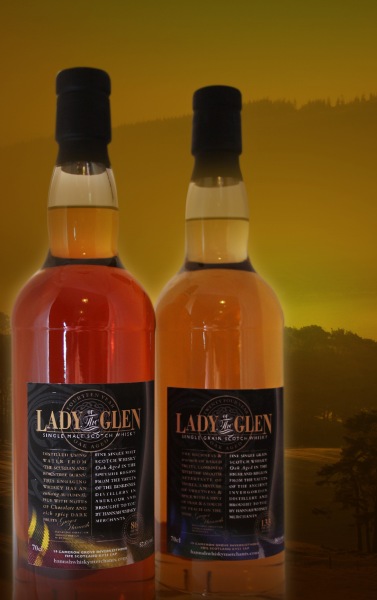
Lady of the Glen Single Cask Whisky

February 1, 2013 in Reviews

Recently, I wrote about a new independent single cask whisky company on the block called Lady of the Glen, which you can read all about here.

In short, the company was started by Gregor Hannah (who is also a bagpiper) in Fife. He will be bottling only single cask whiskies and currently has two to offer in his range: a 24-year old Invergordon and a 14-year old Benrinnes.

As I have written about before, I am a big fan of single cask whiskies (or, at least the ones I am familiar with) and normally experience them through the Scotch Malt Whisky Society. I was, therefore, intrigued to learn of a young whisky aficionado who had spent three years setting up his own single cask bottling company.

I have tried both of his first whisky releases and here are my thoughts on each.

Invergordon: 24-year old: 56%:

(c): Golden mustard

(n): To start, there was LOADS of vanilla and cream, akin to chewy vanilla pods that are desperate to jump right out of the glass. When I added water to help ease that 56% bite, notes of milk chocolate came through in addition.

(p): This was a really spicy whisky without any water (not entirely a surprise) with loads of ginger and lemon flavours. Without water, it wasn’t as multidimensional as I might have expected but it was pleasant. With water, a lovely oiliness came to the surface and there were notes of vanilla, chewy lemon peel and fleshy fruits. It was much easier to handle with water but had a touch of a bitterness that I’m not a massive fan of – but I am really sensitive to any bitter notes, so this will be heightened on my palate.

(f): Without water, this had a thick gingerbread and licorice finish but with water, that heavy flavour eased and more fruity, peach notes came through.

BenRinnes: 14-year-old: 57.8%:

(c): Amber sunset

(n): This was very intriguing – a mix of cherries, a hint of cough syrup, oak, milk chocolate, vanilla, lemon and coconut: a full basket of ripe flavours even without water.

(p): On the palate, it was slightly drying and there was a tiny note of sulphur in there too. It was really fruity with apple, peach, fig and milk chocolate notes. I would never guess it was so strong, as the alcohol burn really didn’t come through in this one. I thought it was delicious but it could be a bit divisive with that touch of sulphur taste lingering in the background.

(f): The finish was all about dried apples. A perfect dessert!

Trying the stylish Yamazaki Four Woods

October 11, 2012 in Uncategorized

Since I first tried a Japanese whisky at The Whisky Exchange Whisky Show last year, I have been a big fan of that country’s products. Chichibu the First was my favourite all around dram from 2011, and I’m constantly discovering new whiskies from there which are very pleasing to the palate.

I also often find myself recommending them to new whisky drinkers as they can be a bit easier on the palate than whiskies from other countries.

Recently, I was invited to try the latest drams being released from Yamazaki distillery. The new Four Woods collection includes a Puncheon cask, Bourbon barrel, Mizunara and Olorosso sherry release, each only made with whisky from that style of cask. All four whiskies – when combined – normally make up the Yamazaki 12, so these make an interesting deconstruction of that whisky.

The new whiskies are being released without an age statement, but I was told most will have been around for about 10 years or more. All will be available for Christmas and the Puncheon, Bourbon and Olorosso bottlings have an RRP of £70. The Mizunara – made from spirit filled into a cask constructed from a very rare Japanese wood of this name – is a bigger step up, price wise, and will sell for between £250-£260.

We started with the Puncheon cask. This release is 48% (the standard ABV for the four being released) and comes from 480 litre, American white oak casks. These are larger than a Hogshead so the spirit ends up being less exposed to wood. This light straw coloured whisky was very gentle on the nose, with hints of vanilla, marzipan, butterscotch and lemon peel, while the palate was sharper than expected, with a caramel sweetness at first that dried out in the mouth, before moving into a peaches and cream flavour. With water, I found more pineapple and cherry juice notes emerged, and the vanilla notes were enhanced on the nose. The palate was ever so slightly more bitter.

Next came the Bourbon release. Surprisingly, I found this one a lot richer on the nose than the Puncheon whisky – dried papaya and butter were the two main notes for me. It was sweeter on the palate as well, with nutmeg and honey flowing through. The dram was soft and pleasing at this stage. When I added a few drops of water, I found even richer flavours burst, which I’d normally associate with a sherry cask whisky – things like brown sugar, baked pineapple and raisin on the nose. The palate was still very bourbony though – vanilla, granulated white sugar and a hint of lemongrass, with a long, woody finish.

Whisky number three was the big ‘un. Mizunara is something you won’t find over here – it is a rare, very tough oak found only in Japan, so it’s a bit like the secret weapon of some drams from there. In the glass, this was a beautiful amber colour that smelled of incense, almonds and cherries – a Bakewell tart housed in a cedar chest! On first sip, it was really mouthfilling, with a tiny bit of smokiness, oranges candied with brandy and sweet cigars. Adding water brought out green apple and papaya notes and, for some reason to me, a bit of the seaside. On the palate, tarragon, butter and cinnamon spice came through, while at the back of the palate there was a slight smoke with a cedar woodiness. It was a treat to try something so different. Questions were raised as to whether it was worth 3.5 times as much as the others though. It is gorgeous and the rarity of seeing a whisky made only from this wood will inevitably push the price up, so it’s not a surprise, I just wish more people would be able to have the chance to try it. If you see it in a bar sometime, give it a try so you can at least experience it without having to fork out for a whole bottle.

We finished on the Oloroso. Made from a first fill, ex-sherry cask this is a ruby coloured dram with a lot of character. On the nose, I got loads of sticky, stewed cherries and melted brown sugar, but there was a tinge of something salty there which I wrote down as being a bit like “soya sauce” – slightly odd, but there you go! After the heavy nose, I was expecting a powerhouse of a dram so was intrigued when it came out much lighter on the palate than I was anticipating. There were still deep flavours – they just didn’t overpower. Instead, hints of dark chocolate and tobacco leaf came through. With water, it became instantly more creamy – browned butter and caramel, along with plum notes. Delicious.

By the end, I found these were – as usual – well constructed Japanese drams. It’s hard for the Japanese to do anything but that. However, these also showed the quality of the individual casks that go into an entry level brand like Yamazaki 12 and I applaud the experimentation by Yamazaki for letting the consumer see each on its own. They are £70, though, so I don’t think many people will be going out and buying all three at that price and the much pricier Mizunara to boot. But, if you do see these around – at tastings or on a bar’s shelf – or if you fancy choosing just one of the bottles to buy as a treat, you’ll be guaranteed a good quality dram.


Too precious to touch: Glenlivet 70

September 25, 2012 in Uncategorized

I’m not a great fan of ‘collecting’ whiskies – of leaving them be, of putting them on a shelf, or hiding them in a dark space, unopened. Some people do this to one day make a profit out of those whiskies left unopened, some to preserve large whisky collections.  While the former is, no doubt, a shrewd business/investment decision, I’ve never been that ‘up’ on my financial sensibility – I went into journalism, not for the money, but for the love of it. And, call me crazy but I much prefer the idea of cracking open a bottle and sharing it amongst friends and family, telling stories and making memories, than leaving it to gather dust.

However, every once in a while something comes along that seems too precious to touch – at least without some forethought. This is the situation I find myself in now.

The other day I arrived home after a few days away to find a rather intriguing looking box waiting for me. Inside was an extraordinarily exciting parcel – a wee teeny sample of the Glenlivet 70 year old. That’s right – 70 year old!

Bottled by Gordon & MacPhail this whisky was put into a cask in 1940, just months after one of the most devastating wars in our history was declared. Times were ever so different then – who, in 1940, would have thought I’d be able to communicate my thoughts and words with people around the world instantly, when all anyone cared about was how long war might persist and what its outcome might be.

To think back, it’s amazing this whisky has even survived here in the UK. After all, the amount of whisky being made and bottled in the 1940s dropped dramatically, due to rationing of barley used in its creation and the shipment to the US of large quantities of stock to make up for the money being spent on US-made war supplies.

The last few bottles of the whisky are now being released as a part of the Generations Collection from Gordon & MacPhail. Based around the company’s long history of family ownership (the grandchildren of original partner, John Urquhart, are instrumental in the business today) the Generations collection was started with the release in 2010 of a 70 year old Mortlach, distilled in 1938. In early 2011, the first bottles of this cask strength (45.9%) Glenlivet 70 year old were released to market. This second release of the remaining 100 70cl, silver stoppered decanters are now being sold at Vancouver International Airport’s new World Duty Free with an estimated price tag of $35,888 (Canadian).


As for my sample? I can’t currently bring myself to open it. I know I will one day soon and I will write about it on here when I do. But, equally, I want to be in the right frame of mind when I finally bring myself to taste a few drops of 70 years of history. It astounds me that this liquid – thought about, nurtured, cared for and conceptualised – so long ago, could find its way to me here in 2012.

But that – as I’ve mentioned before – is the beautiful thing about whisky. Its glorious history is one for us all to revel in – whether that’s over a dram that’s 12 years old or 40 years old. Always remember how amazing it is to have that whisky in your hand, and think about all it’s gone through to get to you. And then, most importantly, enjoy it!

Casking the spirit of Victoria

August 28, 2012 in Uncategorized

The west coast of North America may not be the first place you’d look to find a craft distilling revolution. But there is, most certainly, one going on.

Just like the craft beer decade that really burst onto the scene from the mid-90s, craft distilling is trying to take the local alcohol craze one step further.

Luckily for me, I grew up in the west of Canada and my family now reside on its coast. So, when I head back for visits, I tend to get to try all sorts of cool, up and coming drinks.

Outside of the thoroughly amazing beer and ale offerings, there are now more distilleries popping up. One of the first to do so in Canada was Victoria Spirits, which is making a name for itself in the craft gin and vodka world. Its Victoria Gin is stocked in the parliamentary dining rooms in Canada and the other offerings – like oak-aged gin and hemp vodka – are proving worthy on the drinks scene and a favourite of bartenders.

But, interestingly, the small family team behind the company has also started to play around with whisky making, which is what I stopped by the premises to discover.

Master distiller Peter Hunt has worked for the family business since it switched from small-batch wine production to spirit distillation. The former molecular biologist decided to give up medical research in favour of alcohol research and hasn’t looked back since. He’s joined by brother-in-law Phil Lecours (the distiller), sister Anna (Phil’s wife, the creator of the company’s bitters) and sister Mia (a London-based label designer).

The decision to experiment on the company’s 217 litre handmade, wood-fired copper still (imported from master-stillmakers Muller-Brennereianlagen) and make whisky came in 2009 when they filled one first run, small bourbon barrel with their new make spirit, which is double-distilled and “run through as hard and fast as it can be” to produce a unique spirit, according to Peter.

“Using a still like this, you’ll get a different flavour than a typical still. But that being said, it makes some fantastic spirit,” he said to me during a tour of the twee 35ft x 40ft distillery.

The new make spirit has been carefully monitored ever since. Last year, it was decided the small first run barrel was giving the new make too much flavour, too quickly, so the decision to mix it with a new batch of new make was made. The whisky – currently named ‘Craigdarroch’ after nearby Craigdarroch Castle – will not be ready until 2014.

But the waiting does not seem to faze Peter – possibly because he finds himself too busy doing constant runs for the gin and vodka ranges.

“It’s a bit fly by the seat of our pants right now. I might throw in a barrel of new make again because I like what it did the last time,” he added, chuckling.

What did I think of it?

Well, it is only just over two years old, but it was quite exciting. It was very oaky, but that felt like it would settle down a bit with age. There were notes of apple and a strong twang of vanilla on the nose. But while those flavours could potentially overpower on the palate, I was surprised to find a real burst midway through my sip, with notes of pink peppercorn, pears and caramel seeping through. I think it will be an exciting spirit when it finally finishes doing its work.

In the interim, it was simply a pleasure to meet Peter and witness first hand what seems to be a growing trend on the west coast.

“I know there’s lots more [distilleries] coming because I’m getting the calls from people who want to start,” he told me.

Exciting all around…

Discovering the joyful Wemyss Malts

May 31, 2012 in Uncategorized

Wemyss Malts may not strike many a chord for whisky drinkers, but this small family company should be on any malt lover’s radar. The company provides barley for many distilleries and has been in the business since turn of the 19th century.

The own-label malts do not give-away distillery names, only ages and whether they are blends or single casks. The basis behind the malts is to provide a simple definition for whisky lovers with easy to identify names such as: ‘Honey Spice’, ‘Caribbean Fruits’, ‘Smokehouse’, and ‘Red Berry Cream’ each of which are meant to signify the main flavour involved in the whisky.

The company has won loads of awards, including a double-gold medal at this year’s San Francisco World Spirits Compeition for its 8-year old Peat Chimney.

I was given some samples a little while back but confess I didn’t get to trying them as quickly as I had planned. I’m so glad I have done now.

Here I review four of the brand’s whiskies – I look forward to seeing what else comes from the company in the future.

The Hive: 8 year old – 40%

The whisky was quite light to smell, with notes of creamy vanilla, honey, lemon rind, chlorine and oak.

On the palate it came through much more boyantly with flavours of rich toffee and sudden burst of caramelised smoke and ginger which was very exciting and unexpected.

It finished on a spicy high with a chilli-note at the tip of the tongue and a residual, cinnamon warmth throughout the back of the palate. Very nice indeed.

The Hive: 12 year old – 40%

A gentler dram even than the eight year old. Hints of beeswax, vanilla and very creamy fudge on the nose.

On the palate, it’s lighter than the eight year old to start with a quicker leap to a more pungent smokiness with hints of allspice. It softens out as it goes, leaving honey flavours in its wake.

This is a top-quality, delectable dram. I’m not surprised it won the “best blended whisky” accolade at this year’s Whisky Magazine awards.

Islay Single Cask, 20 year old: “Honey Spice” – 46%

This amber coloured dram is, I’m told, a Bunnahabhain single cask. Rich, woody scents pervade, with hints of stewed apple, sherry, brown sugar and a honey liquor I once I had in an eastern European country.

It’s oily on the tongue; really fills the mouth. Notes of fresh ground pink peppercorns, honey, golden syrup and apples start off this gum-tingling dram, which proceeds to finish on a wood-filled, spicy, smoky note. A touch of water brings down the burn and softens the slightly bitter aftertaste.

I like this whisky and, while it’s not my favourite of the four, it’s got a lot going for it.

Highland Single Cask, 21 year old: “Caribbean Fruits” – 46%

This dram is the colour of summer straw but takes you straight from hay fields to the heat of a tropical island. Bursting fresh pineapple and coconut overwhelm the nose, while sweet hints of maraschino cherries and mango provide a Caribbean punch.

A delicious concoction follows of barbequed pineapple, hazlenuts, fresh grass, vanilla and papaya. I literally went, “ooooo” when I tried this. It won’t be for everyone, but I got a lot of pleasure out of this basket of flavours.


Bowmore Small Batch Reserve: Small batch, big taste

May 29, 2012 in Uncategorized

Every once in a while, you find yourself needing something to take the edge off of things.

And so, it was on a particularly stressful day of late that I decided to open up my sample of the new Bowmore Small Batch Reserve whisky. According to Rachel Barrie – the master blender – one should “relax, take it easy and enter Islay time” with this dram. This sounded appealing. I was particularly desperate at that point to escape exhausting London time.

The new release combines first and second fill bourbon casks to create what the company calls ‘Bowmore’s lightest and most delicate expression to date’. It is meant to pair perfectly with vanilla ice cream, olive oil and sea salt, all of which compliment the various flavour profiles of the whisky.

As I didn’t have these things to hand, I took a bite of vanilla madeleines before a sip of the whisky – it’s not what I’d normally opt for, but my stress levels meant I was craving sugar.

A sip of whisky followed and then…

…and then…

…ahhh…

happiness.

Bliss.

I could actually create a shopping channel style advert out of my appreciation for that moment.

The characteristic Bowmore peatiness was there but in an oh so gentle way. There were hints of fudge, vanilla and oak that one would expect from an ex-bourbon cask, but it wasn’t overpowering. It just said, “Hello, you’re feeling stressed aren’t you? Well, why don’t I use my relaxing flavours to eek away your blues!”

For those that like a heavier, sherried Bowmore (like the Darkest) this might seem a bit too gentle. It’s not yelling at you but just presenting itself for enjoyment. The nose is welcoming with grassy, soft sugary notes that would appeal to a beginner, but I think the palate is complex enough with its creamy smoke, hints of lemongrass and saltiness to encourage a longer-term single malt sipper to still enjoy it.

It may be because I don’t like a whisky that’s too bitter or smoky but, for me, this was really, fantastically lovely. I fell for it.

It’s the kind of whisky that, if I had a whole bottle, I’d probably sit down with friends new to whisky and spend the night drinking it all. It was just what I needed to take the edge off!

Glenglassaugh’s Phoenix

December 15, 2011 in Uncategorized

After more than 25 years, Glenglassaugh Distillery will officially rise from the ashes with its first bottling due to take place Friday.

The distillery – which was reopened in November 2008 after 22 years of neglect – is located in north-east of Scotland near the border of Speyside in the small town of Portsoy. It was first established in 1875 and operated for more than 100 years until it was mothballed in 1986.

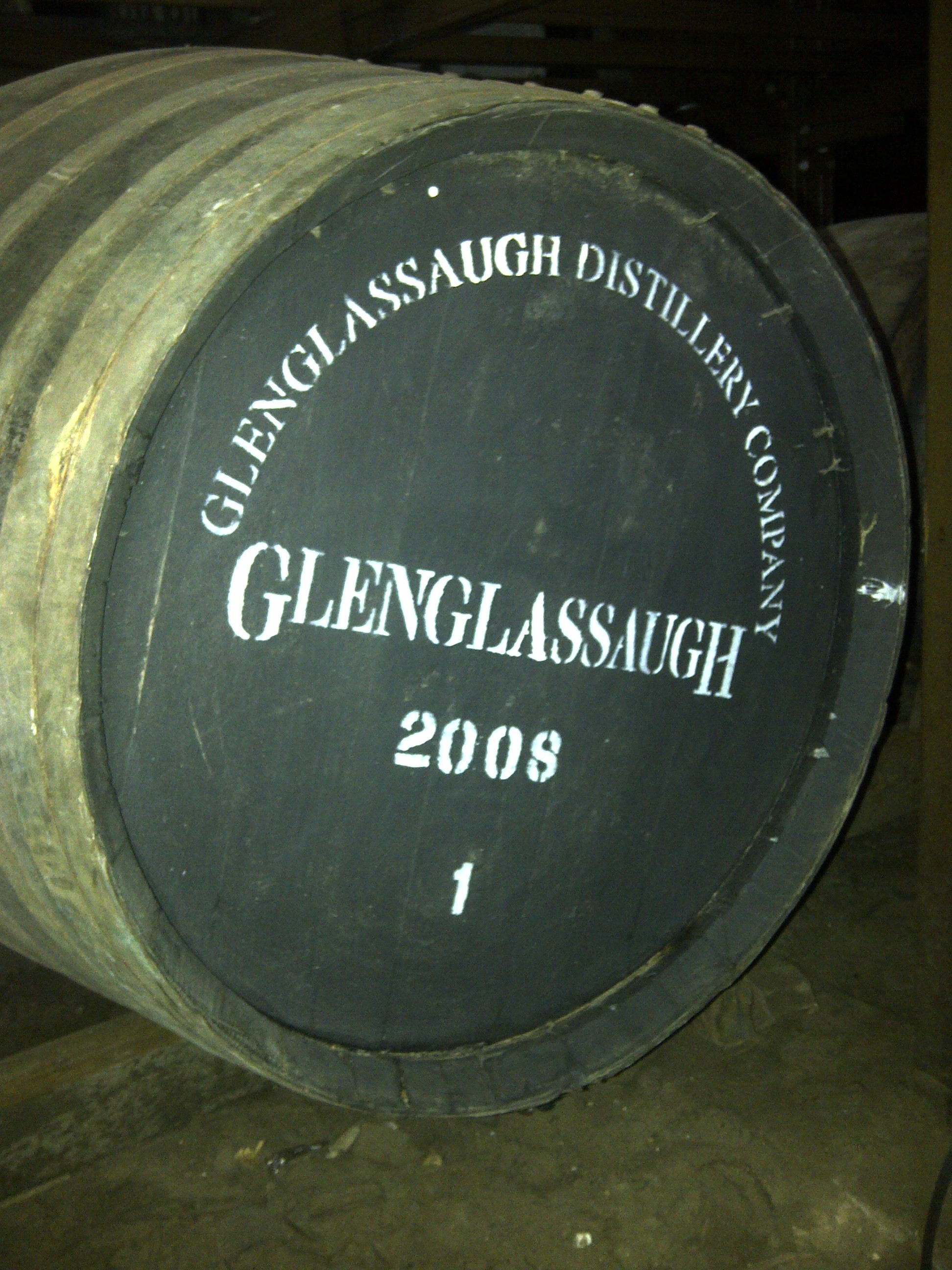
It was left like that – with roof and walls crumbling – for 21 years until a group of investors decided to see if its stock had the quality worth taking a monetary leap on. After deeming it rather tasty, indeed, the distillery was purchased and reopened, with the first cask being filled on the 16 December, 2008.

The first cask from the revived Glenglassaugh Distillery.

I first learned about Glenglassaugh when I attended this year’s TWE Whisky Show. There I met Ronnie Routledge – the distillery’s customer account manager and general whisky expert – who gave me a wee sampling of the fantastic Chosen Few bottling (a 35-year-old oakey, appley whisky) and also a try of the Fledgling XB. Despite being only a year old, it was full of flavour: caramel, soft fruit, and an aftertaste of apricot and camembert. A sign of good things to come, I thought.

Since re-opening, Glenglassaugh’s older stock has won many awards, including “Best Single Cask Scotch Whisky” and “Best 40 Year Old at the Wine and Spirit Competition along with being voted best 40 year old Scotch in Jim Murray’s Whisky Bible 2010.

The distillery prides itself on trying to keep to tradition by basing current production on the old production manuals found upon purchasing the property. They still use a traditional dunnage warehouse from 1875 and do their bottlings by hand.

The authentication certifiate that will come with the first bottling.

So, it is, no doubt, with pride that the first bottles will be filled and distributed to those lucky enough to have had the forethought to purchase one of the 650 available. The whisky was left in a refill butt until December 2010, and was then matured, half in a first-fill ex-Palo Cortado sherry hogshead barrel and the other half in a first-fill ex-Pedro Ximenez (PX) sherry hogshead, before being transferred back into the original butt to merge the flavours over three months (from September to December this year). Each bottle will come with its own certificate of authentication showing this was part of the distillery’s first foray into fresh stock.

Next year will see a new product – Revival – released and, already doing well off the back of the original stock, Glenglassaugh will now be able to show it has fully risen from the ashes to fly high, as it was always meant to do. There’s something rather lovely about it all, Miss Whisky thinks!

For those wishing to purchase a bottle, head to the online shop at www.glenglassaugh.com. The 700ml bottle retails at £90 plus shipping and will also be available directly at the distillery after the 19th December.

Peatastic Penderyn

October 25, 2011 in Reviews

  “We said we were never going to produce a peated whisky,” explained Gillian MacDonald, distiller at Penderyn, the country’s only Welsh whisky producer. “It happened by complete fluke.”

Fluke it may have been, but one that has proved incredibly popular – even by peat-hating malt drinkers like myself.

As a whisky-loving female, I have tried many a malt, but have still never warmed to the idea of the smoky peated Islay whiskies. They were shunned, passed to the unwanted pile – until now.

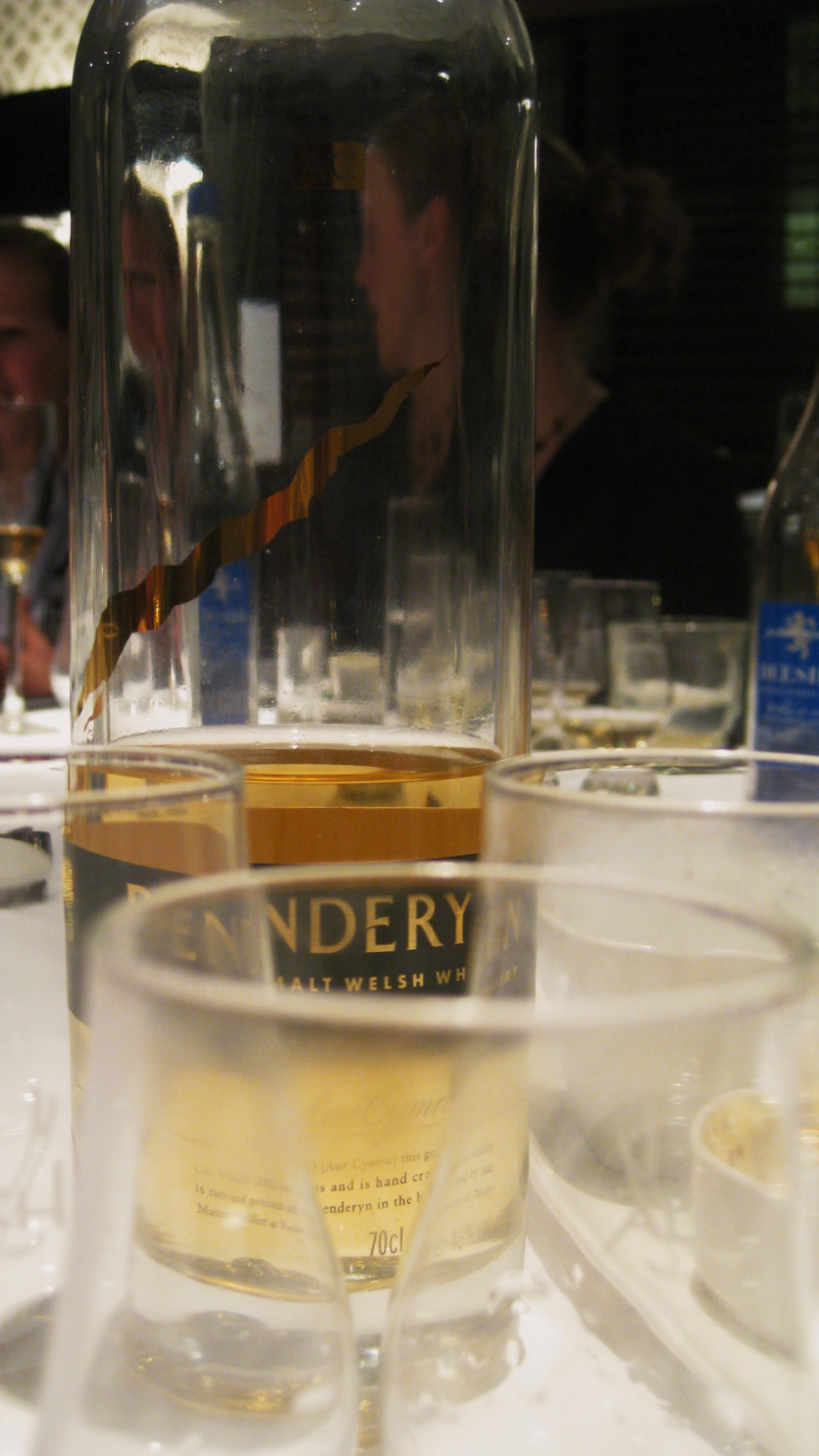
At a recent women’s only (!) whisky tasting at the Albannach bar in London, I discovered the beauty of Penderyn’s Peated whisky. But, as MacDonald told the tasters, it should have never happened.

Whiskies pertaining a peaty presence do so because the barley used to make it is first dried over bricks of peat, which infuse the flavour right from the start.

For Penderyn – a staunchly proud whisky maker “down in the valleys” – this technique was not one it wanted to apply because the distinctive flavour is too associated with Scotch.

So how did they do it?

“We re-use casks. So, we rang Scotland and asked for some ex-Scotch casks, specifically saying we don’t want any filthy peat casks! But somehow they slipped in a few and we didn’t smell them beforehand so they got through,” said MacDonald.

After four years of putting the peat-flavoured whisky to one side, MacDonald says they finally decided to come out with a special edition, one-time only bottling of the stuff.

Unforunately, the entire whisky world fell for it, with one famous reviewer giving it an incredibly high score on the whisky scale of 92.5 out of 100.

And I can understand why – the subtle peat flavours are perfect for those wanting a bit of smoky notes in their malt, without it overwhelming the mouth with the firey, earthy intensity common to the more traditional blends.

I can only imagine MacDonald will be on the phone more frequently, asking for those pesky peaty casks to continue the tasty delight that is the Penderyn Peated.

From my Gwiltypleasures Blog, first posted April 2011. For direct link, see: www.gwiltypleasures.com.